
In the realm of advancing technology, the pathways to unraveling scientific enigmas both in space and on Earth are widening. Below are ten notable occurrences of 2025, presented without hierarchy.
The Vera C. Rubin Observatory, situated in Chile, unveiled its inaugural images this year. While not the largest telescope globally, it boasts the world’s most massive digital camera with 3.2 gigapixels. Over a decade, the observatory will capture high-resolution images of the entire southern sky nightly, creating a comprehensive time-lapse movie showcasing celestial movements, from local asteroids and planets to cosmic collisions, universal expansion, and enigmatic dark matter.
In September 2023, a small capsule returned to Earth bearing samples collected from the OSIRIS-REx spacecraft on the asteroid Bennu. Analysis of the material revealed the presence of sugars, amino acids, nucleobases, and carboxylic acids – key components for life on Earth. Although this does not confirm life on the asteroid, it suggests that life-sustaining elements were prevalent in the early solar system and may have been transported to Earth from space.
On June 4, 2025, Marc Garneau, Canada’s pioneer astronaut, passed away at 76. As the first Canadian in space, Garneau embarked on three spaceflights, including aboard the Space Shuttle Challenger. His distinguished career extended to political roles, serving as Minister of Transport and Minister of Foreign Affairs. His memoir, “Marc Garneau, A Most Extraordinary Ride,” chronicles his remarkable journey.
Comet 3I/ATLAS, the fastest comet ever recorded hurtling through our solar system at a staggering speed of 209,000 km/hr, was observed. Its extraordinary velocity indicated an origin from another star system, traversing interstellar space for billions of years. Composed of ice and dust, this comet provided insights into the composition of distant star systems.
Ocean acidification reached a critical juncture in 2025, posing threats to global coral reefs due to excessive carbon dioxide absorption. The resulting acidification, coupled with soaring ocean temperatures, endangers marine ecosystems, emphasizing the urgent need to address carbon emissions and transition away from fossil fuels.
Geoengineering initiatives were scrutinized by polar scientists in a study, cautioning against risky interventions like injecting aerosols into the stratosphere. Emphasis was placed on mitigating carbon emissions to combat climate change effectively rather than resorting to potentially hazardous geoengineering tactics.
In a groundbreaking first, the FRAM2 mission achieved a polar orbit around Earth using a SpaceX Dragon capsule, enabling direct observations over the north and south poles. This marked a significant deviation from traditional equatorial missions, offering a new perspective on polar regions from space.
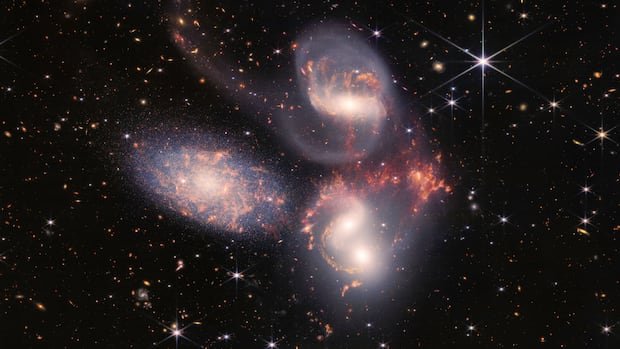
The James Webb Space Telescope, stationed 1.5 million kilometers from Earth, continues to unravel celestial mysteries, including planetary atmospheres, black hole phenomena, and ancient galaxies post-Big Bang. This colossal telescope remains instrumental in enhancing our understanding of the universe.
After a challenging nine-month stint aboard the International Space Station, American astronauts Suni Williams and Butch Wilmore safely returned to Earth off the Florida coast. Their journey, marred by spacecraft technical issues, culminated in a successful rescue mission via a SpaceX Dragon capsule in March 2025.
Designated as the International Year of Quantum Science and Technology by UNESCO, 2025 heralds a global initiative to raise awareness of quantum computing advancements. Leveraging quantum effects for accelerated data analysis, this technology is poised to revolutionize fields like drug discovery and weather forecasting.
These notable events of 2025 reflect the intersection of innovation, exploration, and scientific discovery shaping our understanding of the cosmos and our planet.