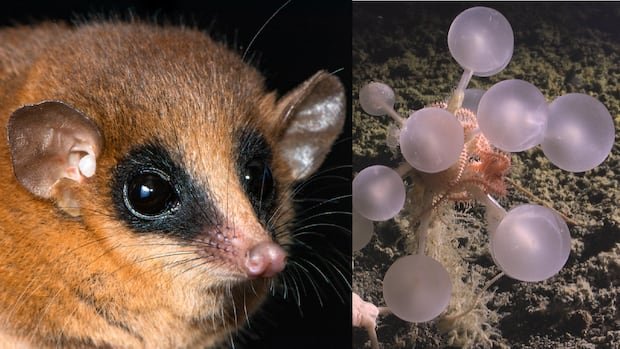

In 2025, a host of fascinating new species were documented by scientists, including a spider with unusually long genitalia, a predatory caterpillar that adorns itself with prey parts, and a diminutive mountain-dwelling opossum. Research indicates that approximately 16,000 new species are identified annually, marking a growing trend with 15% of known species being newly classified over the last two decades.
John Wiens, an ecology professor at the University of Arizona and co-author of the study, emphasizes the significance of officially recognizing these species, stating that without this knowledge, it is challenging to protect them from extinction. The process of identifying and describing these creatures sheds light on their existence and aids in conservation efforts.
Among the notable discoveries are four tarantula species in the Horn of Africa and the Arabian Peninsula, with males boasting the longest genitalia among all known tarantulas. These arachnids, particularly the Satyrex ferox species, exhibit remarkable features, including impressive leg spans and elongated palps that aid in mating survival.
In Hawaii, scientists encountered a unique “bone collector” caterpillar that inhabits spider webs, feeds on trapped prey, and fashions a coat of insect body parts around its body. This distinctive caterpillar, which transforms into a moth, was found in a limited forest area, indicating a potential threat to its survival.
Explorations in the Southern Ocean near Antarctica led to the discovery of 30 new species, including the carnivorous “death-ball” sponge equipped with spheres covered in hooks for trapping prey. Additionally, new sea star varieties and an iridescent scale worm were among the intriguing finds in this uncharted marine realm.
In shallower waters, a sea slug resembling fried eggs was identified in Indonesia, showcasing vibrant colors as a warning signal to predators. Similarly, the new Okanagan crayfish in British Columbia stood out for its distinct features, indicating its endangered status due to human activities in its habitat.
Canadian researchers unveiled six new tube-nosed bat species from the Philippines, shedding light on these small mammals’ diversity and distribution. Moreover, reptiles such as the Pinocchio chameleon from Madagascar and the wolf snake honoring the late Steve Irwin added to the roster of species named after famous figures.
The discovery of the tiny mouse opossum in the Peruvian Andes, along with live-bearing toads in the Eastern Arc Mountains of Tanzania, further highlights the biodiversity and evolutionary adaptations seen in nature. These findings underscore the importance of ongoing scientific exploration and documentation to enhance our understanding of the natural world.