
The upcoming review of the Canada-U.S.-Mexico Agreement (CUSMA) is set to begin next year, with U.S. President Donald Trump aiming to reshape global trade dynamics and attract industries from neighboring countries. Negotiations surrounding CUSMA were a significant challenge for Ottawa during Trump’s first term, but ultimately resulted in a successful replacement for the North American Free Trade Agreement.
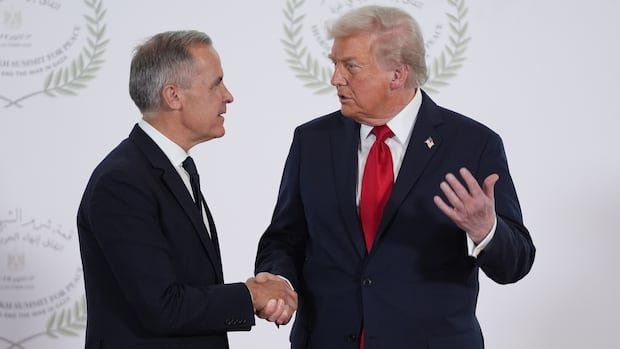
Despite the initial success of CUSMA, doubts have emerged about its future under Trump’s renewed administration. Describing the deal as “transitional,” Trump hinted that it may have fulfilled its purpose during a recent meeting with Prime Minister Mark Carney. According to Fen Osler Hampson, an international affairs professor at Carleton University, the depth of the economic ties between the U.S. and Canada goes beyond what is visible on the surface.
The review process for CUSMA commenced in the U.S. with public consultations in September. The Trump administration is expected to present a report to Congress early next year outlining desired changes. While formal discussions are scheduled to begin in July, Canada’s Trade Minister Dominic LeBlanc will initiate talks with U.S. counterparts in January.
The three countries involved face a choice regarding CUSMA: renew the agreement for another 16 years, withdraw from it entirely, or indicate non-renewal and non-withdrawal, triggering annual reviews. Trump’s statements suggest a preference for long-term negotiations, but he also raised the possibility of letting CUSMA expire.
Key issues likely to be addressed in the negotiations include longstanding trade disputes such as Canada’s dairy supply management system and softwood lumber sector subsidies. The U.S. also has concerns about Canadian regulations impacting digital services firms. Additionally, the auto industry’s integration, regional content requirements, and labor standards will be under scrutiny.
For Canada, leveraging critical minerals and energy resources could be pivotal bargaining chips in the negotiations. The U.S. administration’s focus on enhancing AI data centers and reducing China’s dominance in critical minerals supply chain may lead to trade concessions in exchange for a stable supply from Canada.
As the negotiations proceed, unresolved trade disputes and potential changes in Congress following the midterm elections could impact the outcome. While uncertainties persist regarding the extent of changes and the need for congressional approval, Trump’s authority to withdraw from the agreement independently remains a possibility.
Amidst these developments, efforts by Canada to diversify trade relationships and reduce dependence on the U.S. market are ongoing. The balance of leverage between the U.S. and Canada in the upcoming negotiations remains uncertain, contingent on their respective objectives and long-term strategies.