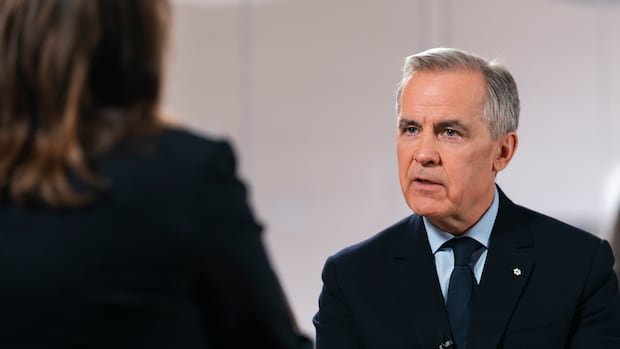

Prime Minister Mark Carney has voiced his concerns about Canada’s excessive regulatory environment and inadequate investments in clean energy and technology, marking a departure from the previous government’s environmental policies. In an interview with CBC News, Carney emphasized the need for tangible actions over regulatory rhetoric and inaction.
Carney, who established a global banking group to combat climate change, has been questioned about his dedication to environmental issues following an agreement with Alberta that could facilitate a new oil pipeline to British Columbia’s northwest coast. This agreement also involved suspending the federal oil and gas emissions cap and Alberta’s obligations under federal clean electricity regulations, key components of the previous climate plan led by former Prime Minister Justin Trudeau.
Acknowledging the country’s shortfall in meeting its 2030 climate target, Carney highlighted the importance of carbon capture and storage, as well as nuclear power generation, as pivotal strategies. Alberta committed to developing a nuclear generation strategy with the federal government by 2027 and agreed to raise the industrial carbon price to a minimum of $130 per tonne from the current $95 per tonne level.
Carney emphasized that the memorandum of understanding with Alberta opens up opportunities for investments in various sectors, including nuclear, interties, data centers, carbon capture, and the potential pipeline. The prime minister also addressed the resignation of former Environment Minister Steven Guilbeault, who opposed the Alberta agreement, stating that adjustments were made to the agreement in response to Guilbeault’s concerns.
Despite Guilbeault’s resignation and criticism of dismantling key climate action measures, Carney reiterated his support for a pipeline accompanied by carbon capture technology and endorsed by various stakeholders. He emphasized that the pipeline project would proceed only if all conditions set out in the agreement are met.
Carney dismissed attempts by the Conservatives to force a clear stance on pipeline support, emphasizing the comprehensive nature of the agreement and the need to consider all aspects, not just selective components. Alberta officials aim to commence pipeline construction by 2029, aligning with the broader objectives outlined in the agreement.