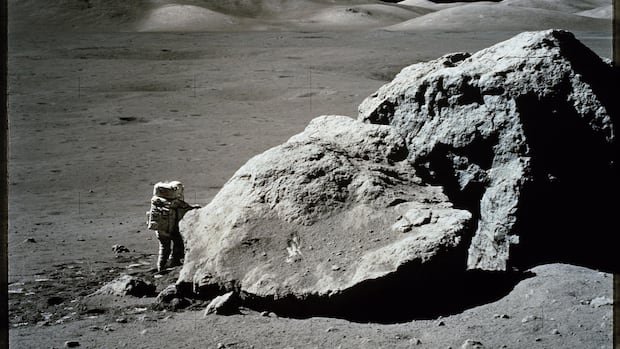

On the historic date of July 20, 1969, the global audience held its breath as two American astronauts, Neil Armstrong and Buzz Aldrin, gracefully maneuvered on the moon’s surface, while Michael Collins oversaw from the command module above. This event marked the beginning of the space age, envisioning humanity breaking free from the confines of Earth and venturing into space.
Despite subsequent missions, including the well-known Apollo 13 incident which prevented a lunar landing, humanity’s lunar aspirations came to a halt after Apollo 17 in December 1972. Various factors such as the expensive Vietnam War, achieving the goal of surpassing the former Soviet Union in reaching the moon, and dwindling public interest have been attributed to the end of moon missions, leaving a gap of 53 years since humans last approached the moon.
The landscape is evolving with NASA’s ambitious Artemis program, aiming to bring humans back to the moon’s surface in the coming years. The program’s objective is not just about revisiting the moon but also for scientific exploration and engineering advancements, pushing the boundaries of human spaceflight.
The upcoming Artemis II mission, scheduled for early February, will orbit the moon with Canadian Space Agency’s Jeremy Hansen and NASA astronauts Reid Wiseman, Victor Glover, and Christina Koch on board. While they won’t land on the moon, their mission will set a new record for the farthest humans have traveled, conducting vital hardware tests and experiments to pave the way for Artemis III in 2028, where astronauts will return to the lunar surface, specifically targeting the moon’s unexplored south pole.
Besides NASA’s Artemis program involving 61 countries, China and India are also racing towards lunar exploration, with plans to land humans on the moon by 2030 and 2040, respectively. The moon has become a focal point for many, not just for exploration but also as a potential long-term habitat, attracting investments from over a dozen private companies.
While some may question the allocation of resources to lunar missions, space agencies and private entities view it as a strategic investment. The involvement of private companies highlights the economic potential of lunar activities, with prospects ranging from resource exploitation to technological spin-offs benefiting various industries.
The science derived from lunar missions extends beyond space exploration, impacting everyday life on Earth. Medical advancements, technological innovations such as computers, and unexpected spin-offs like food safety improvements have stemmed from space exploration efforts, showcasing the broader benefits of such endeavors.
As governments collaborate with companies to explore lunar opportunities, a new space economy is emerging, driving innovation and creating job opportunities. The focus on lunar mining and resource extraction, including water and helium-3 for clean energy solutions, underscores the potential for economic growth and technological advancement in the space sector.
The return to the moon signifies a pivotal moment in space exploration, with the outcome poised to shape the future of humanity. Despite uncertainties, the optimism surrounding space exploration and utilization, coupled with advancements like artificial intelligence, holds the promise of transformative changes for individuals and society at large.