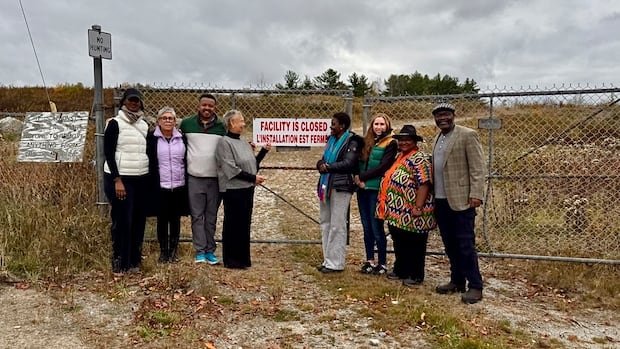

An international organization known for addressing human rights issues in developing nations is now involved in a situation in a small town in southwest Nova Scotia. Amnesty International has joined efforts in the community to secure clean water for African Nova Scotian residents living near an old landfill site in Shelburne.
The landfill, which operated for 70 years before closing in 2016, is suspected of contaminating well water and potentially causing a high incidence of cancer among the approximately 50 Black residents residing nearby. Amnesty International’s Canadian representatives visited the area in late October to firsthand listen to the residents’ accounts of past and ongoing challenges.
David Matsinhe, the organization’s director of research, policy, and advocacy, expressed astonishment at the conditions, emphasizing the urgent need to address the situation. The fenced-off landfill conceals decades of waste from various sources, including residential areas, a hospital, and a military base, raising concerns about environmental hazards.
The core issue at hand, as highlighted by Matsinhe, is the violation of fundamental human rights, particularly the rights to clean water and secure land tenure. Amnesty International has called upon local authorities in Shelburne to address the long-standing environmental and racial injustices faced by the community by ensuring access to safe drinking water, cleaning up the landfill, and holding those responsible for the environmental harm accountable.
The Mayor of Shelburne, Stan Jacklin, declined an interview request regarding the matter, stating that the town will provide comprehensive historical information before making any public comments. Louise Delisle, the founder of SEED, an organization advocating for clean water in Shelburne, welcomed Amnesty International’s involvement, emphasizing the importance of raising awareness about environmental issues affecting marginalized communities.
Ongoing efforts include testing the landfill site for potential hazards and exploring solutions to provide clean drinking water to the community. Researchers from McMaster and Dalhousie universities are investigating the possible links between the landfill and health issues in the area. Delisle stressed the importance of reparations for the affected residents, pointing out the economic impacts of environmental racism on property values and the community’s overall well-being.
Despite challenges, there is optimism that progress will be made towards resolving the water contamination issue and ensuring a sustainable solution for the community. Delisle remains hopeful that with collective efforts, residents will no longer have to rely on bottled water for their daily needs.