
An Alberta-based company planning to mine silica sand in Manitoba has joined forces with the largest university in the province to develop an innovative groundwater monitoring network. This collaboration aims to create a cutting-edge system for tracking aquifer health in real-time, utilizing technology that is increasingly critical for global groundwater studies.
President Carla Devlin of Sio Silica announced the partnership with the University of Manitoba for a feasibility study and the creation of a scientifically robust, non-intrusive monitoring system. The initiative is not only intended for the company’s operations but also as a tool for responsible resource management across Manitoba.
The move comes as Sio Silica renews efforts to extract sand from the sandstone aquifer beneath the Rural Municipality of Springfield in southeastern Manitoba. Previously, the company’s request for a sand extraction license in 2024 was denied by the NDP government due to concerns about potential impacts on water quality and underground stability.
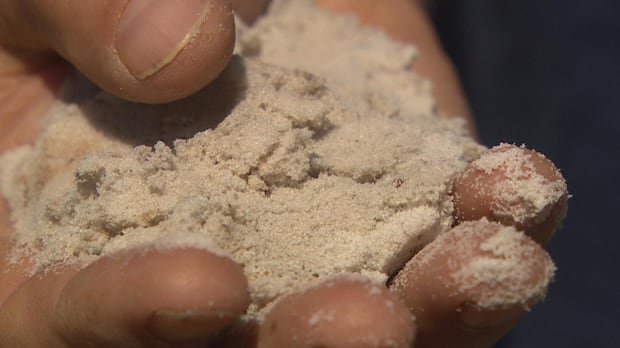
Initially, Sio Silica’s proposal involved drilling 7,200 wells in the region east and southeast of Winnipeg over a 25-year period to extract silica sand used in various industries. However, facing community opposition over environmental risks and water contamination fears, the company revised its plan to drill fewer wells and extract sand more gradually in its recent license application.
Devlin emphasized that the collaboration with the university is independent of the license application process but signifies a new level of transparency for the project. The research project is aimed at enhancing understanding of the aquifer system as a whole through advanced monitoring and open data sharing to ensure informed decision-making based on scientific evidence and long-term sustainability.
Describing the research project as a “game changer,” Sio Silica’s technology team, led by Devlin, highlighted the comprehensive groundwater database that will be generated, offering insights into the southern Manitoba aquifer that would otherwise require significant government investment to replicate.
University of Manitoba’s associate professor Ricardo Mantilla, overseeing the research project, explained the utilization of quantum gravimetry technology to measure changes in the gravitational field as groundwater moves. While this technology can determine groundwater quantities, it does not assess water quality. Mantilla stressed the significance of the project for Manitoba’s water management, emphasizing the importance of understanding the interactions between surface and groundwater in the province.
Hydrogeologist Landon Halloran noted the global trend of using quantum gravimetry for groundwater monitoring and its potential to reduce the need for costly well drilling. Highlighting the importance of safeguarding groundwater as a vital water resource, Halloran emphasized the need for continuous monitoring and protection of these invisible but essential water reserves.