
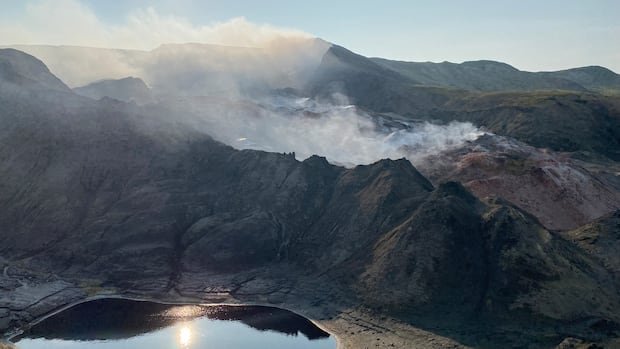

Calgary scientists have identified what they consider to be some of the most acidic natural water on Earth in the Northwest Territories. The thawing of permafrost and land erosion processes in the Smoking Hills Formation, driven by climate change, is causing the release of toxic metals and highly acidic substances into nearby rivers, bays, and potentially the Arctic Ocean.
Research scientist Stephen Grasby from the Geological Survey of Canada visited the area on the north shore of the territory in 2017 and 2023. He was struck by the significant levels of toxicity and acidity present in the ponds surrounding the Smoking Hills. Grasby expressed awe at nature’s ability to produce extremely toxic acidic waters surpassing anything humans could create industrially.
The natural occurrence of toxic metals in the region is linked to pyrite, also known as “fool’s gold,” which trapped these elements underground around 85 million years ago during a period of volcanic activity in Arctic Canada. The exposure of pyrite to oxygen, facilitated by slumping of the land, has led to the release of high quantities of metals into the water bodies around the Smoking Hills.
Grasby observed a notable increase in slumping activity between his two visits, resulting in ponds that had transformed into black, oil-like substances with such high acidity that conventional pH meters struggled to measure accurately. The ground temperature in the vicinity was too extreme for precise measurement, indicating temperatures well beyond the capability of standard equipment.
The ongoing thawing of permafrost, exacerbated by climate change, is compounding the situation further. Experts like Elliott Skierszkan from Carleton University highlight the emerging challenges posed by permafrost thaw on water quality, emphasizing the need for enhanced understanding and management of these environmental changes.
The potential environmental impacts of these phenomena remain largely unknown, raising concerns about the spread of metals into other water bodies and ecosystems. Grasby and Skierszkan stress the importance of further research to grasp the full extent of the situation and its implications on the delicate Arctic environment.
As metals flow downstream, their impact on river ecosystems becomes a significant concern. The precipitation of metals due to changes in pH can harm aquatic life and habitats, underscoring the urgency for increased scientific inquiry and monitoring in the region.