
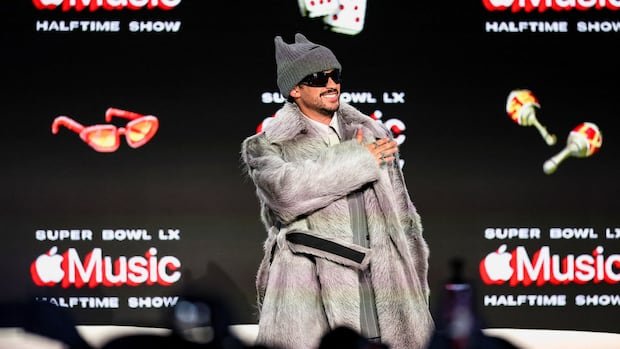

In just four days, Bad Bunny, the renowned Puerto Rican artist, will grace the NFL Super Bowl halftime show, a monumental stage in the music industry. Despite the anticipation, Bad Bunny remained mysterious during a recent press conference, declining to reveal any potential surprises for his performance. However, he assured fans that they would have a fantastic time filled with joy and dancing.
Addressing the cultural commentary surrounding his halftime show selection, the artist has been vocal about political issues, notably criticizing the U.S. immigration policies in a recent Grammy Awards speech. Bad Bunny’s remarks have sparked discussions on the role of politics in his upcoming performance, with NFL Commissioner Roger Goodell expressing confidence in the artist’s ability to unite the audience through his music.
While political statements are expected to be more subtle at the Super Bowl compared to the Grammys, where artists have more freedom to express their views, Bad Bunny is anticipated to convey his message implicitly. The tightly managed nature of the halftime show aims to avoid controversial content but allows room for artists to convey subtle messages.
The decision to have Bad Bunny perform has stirred political debates, with conservative voices questioning the artist’s selection due to his stance on various issues, including immigration and his lack of English songs. Despite the controversies, Bad Bunny’s significance within the Latino community is undeniable, with his commitment to singing predominantly in Spanish and addressing social issues making him a symbol of cultural and political importance.
As the Super Bowl approaches, the discussions around Bad Bunny’s performance continue to highlight the intersection of music, culture, and politics, underscoring the artist’s influence and the broader implications of his platform.