
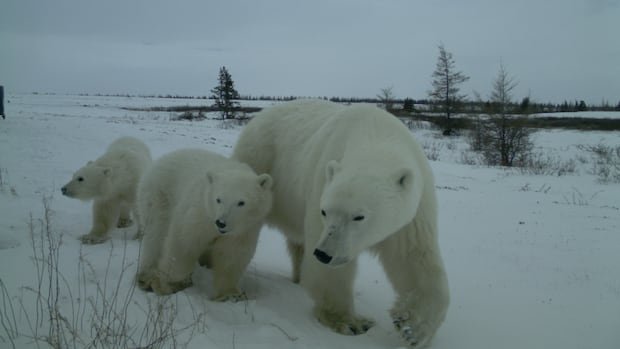

In Canada’s northern regions, a growing number of polar bears have been seen coming ashore, interacting with local residents. Initially, it was believed that these bears were starving due to diminishing sea ice, driving them to seek food, potentially even humans. However, a recent 11-year study conducted by researchers from the University of Saskatchewan and University of Manitoba has challenged this assumption.
According to Douglas Clark, a professor at the U of S, the study revealed that it wasn’t just undernourished bears coming ashore. The longer the bears stayed off the ice, the more likely it was for bears of all sizes, ages, and conditions to approach human settlements. This increased human-bear interaction was primarily due to the bears spending more time on land.
The research, which involved monitoring polar bears using trail cameras in Wapusk National Park near Hudson Bay, indicated that the bears were not specifically targeting humans for food. Instead, as sea ice continues to shrink due to climate change, the bears are forced to spend extended periods on shore, bringing them into closer contact with human activities.
Although some bears were observed to be hungry, they did not display aggressive behavior towards humans. Clark emphasized that while nutritional stress did influence bear behavior, it did not lead to mass migrations of bears into communities. The study highlighted the importance of understanding the impact of climate change on polar bear habits and emphasized that starving bears could still pose a significant threat if they encounter humans.
Alex Crawford, an assistant professor at the University of Manitoba, emphasized that as sea ice diminishes, polar bears are likely to interact more with humans due to increased time spent on land. However, the research team clarified that healthier bears were not more inclined to seek out human contact. The ongoing research aims to track long-term changes in polar bear behavior in response to alterations in their environment and food sources.