
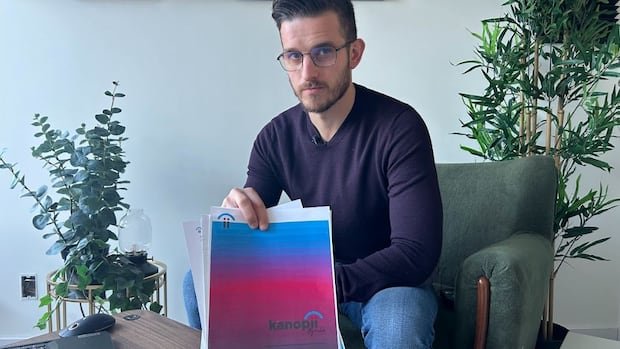

Rémi Lhomme was filled with optimism about his career prospects when he joined a Calgary travel startup in the spring of 2024. Initially, he saw it as a promising opportunity to build his career from scratch alongside the company’s growth ambitions. The startup, Kanopii, positioned itself as a disruptive force in the global online travel agency sector.
However, the situation took a turn for the worse as Lhomme and his colleagues found themselves missing their regular paychecks, which eventually stopped altogether by the end of 2024. This financial turmoil left them grappling with the stress of covering rent, food expenses, and trying to recover the lost wages. Unbeknownst to Lhomme, the CEO of Kanopii had a history of founding businesses that had left employees in financial distress.
Presently, Kanopii owes Lhomme a substantial sum of $14,001.56 as per a directive from the Alberta government. CBC News interviewed several former employees who shared similar stories of substantial unpaid wages. According to Alberta’s public registry of employers with outstanding debts to employees, Kanopii’s total outstanding payments exceed $152,000.
Despite requests for an interview, Kanopii’s CEO, Ifeanyi Daniels-Akunekwe, declined but insisted in an email response that the company had never intended to deceive its employees. Daniels-Akunekwe attributed the payment delays to unforeseen banking challenges and the reliance on investor funding for payroll, leading to disruptions in the company’s operations.
Before the issues at Kanopii, there was 3volution Homes Group Inc., another venture by Daniels-Akunekwe that left homebuyers in Edmonton with unfinished homes and unresolved mortgages. The company is currently listed as owing over $80,000 in wages, vacation pay, and termination pay.
Despite the challenges faced by employees, the legal complexities surrounding personal liability for the company’s failures make it difficult to hold Daniels-Akunekwe accountable under the concept of the corporate veil. This legal principle separates the individual from the corporation’s liabilities, posing obstacles to seeking justice for the affected workers.
Numerous legal actions have been initiated against both Kanopii and 3volution, reflecting the extent of the financial turmoil caused by these failed businesses. Alberta’s Ministry of Jobs, Economy, Trade, and Immigration clarified that while employment standards regulate aspects like wages and work hours, they do not govern broader entrepreneurial decisions.
The ministry emphasized that employers have a legal obligation to settle outstanding payments and outlined the options available for individuals to pursue recovery, either independently or through government assistance. Legislative provisions in Alberta empower the government to take action to recover unpaid wages, including issuing payment demands to third parties.
The plight of employees like Lhomme highlights the challenges faced by individuals seeking to recover unpaid wages from failed businesses, underscoring the need for enhanced legal protections and accountability measures in the entrepreneurial ecosystem.