
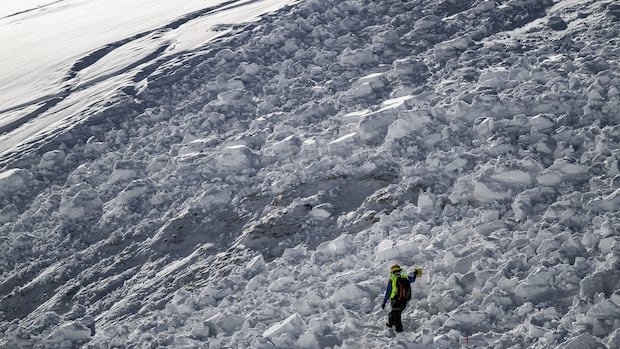

In February, fatal avalanches struck British Columbia, Alberta, California, and Utah, resulting in multiple casualties. The toll was particularly severe in California, where nine individuals lost their lives in a single avalanche incident. Meanwhile, Europe has witnessed 125 avalanche-related fatalities from locations spanning Andorra to Slovakia this season.
These incidents underscore the persistent hazards associated with backcountry activities, even for experienced and well-equipped individuals. The unpredictable nature of avalanches poses significant challenges in forecasting their occurrence.
Experts interviewed by CBC News shed light on the formation of avalanches, their elusive predictability, and the potential impact of climate change on their severity. Simon Horton, a research officer at Avalanche Canada, defines an avalanche as a swiftly moving mass of snow. Ethan Greene, director of the Colorado Avalanche Information Center, explains that avalanches typically occur when a strong layer of snow overlays a weaker one, triggered by external factors.
Nicolas Eckert, a researcher from Université Grenoble Alpes, emphasizes the evolving nature of snowpacks influenced by changing weather conditions. Different types of avalanches exist, ranging from loose sluffs to cohesive slabs, each requiring specific triggers.
Despite advancements in avalanche understanding, accurately predicting their timing remains a challenge due to the unique characteristics of each snowpack. Climate change introduces further complexities, affecting snow quantities and temperatures, potentially leading to weaker snowpack layers. The interplay of weather patterns and human behavior also influences avalanche risks, necessitating caution and preparedness for individuals engaging in outdoor activities.
In addition to staying informed with local forecasts and acquiring proper safety gear and training, experts recommend establishing clear group guidelines and decision-making processes to mitigate risks during backcountry excursions.