
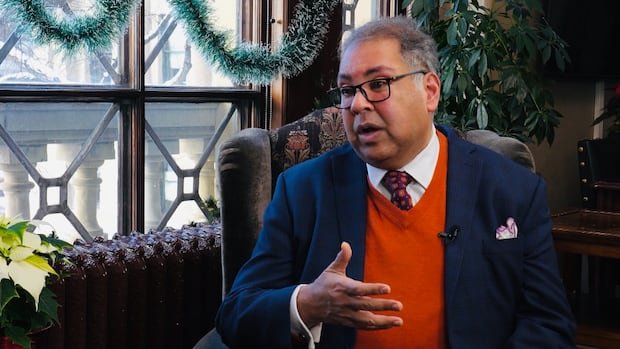

Former Calgary mayor Naheed Nenshi revealed that he and the city council were unaware of the high-risk status of Calgary’s water system in 2017, particularly concerning the Bearspaw feeder main inspection. A recent independent review highlighted that city officials had recommended inspections of the critical water feeder main in 2017, 2019, and 2022, but these were consistently postponed. This led to a lack of expert guidance for multiple city councils overseeing the water system.
Nenshi, who led as mayor from 2010 to 2021 and now heads Alberta’s NDP opposition, expressed that crucial information regarding the high-risk status of the Bearspaw was not communicated to decision-makers during his tenure. The delayed inspections eventually resulted in the catastrophic 2024 break of the Bearspaw feeder main, causing significant water restrictions for Calgarians. A recent additional break has once again placed pressure on Calgary’s water system.
The independent panel’s report, issued recently, highlighted systemic challenges within Calgary’s water infrastructure dating back several decades. Nenshi acknowledged that during his time as mayor, the city prioritized growth and expansion over essential maintenance of existing infrastructure, a decision that contributed to the system’s vulnerabilities.
Former city councilor Danielle Smith criticized Nenshi for neglecting to inspect the Bearspaw following major flooding in 2013, placing some accountability on him for the subsequent water main breaks. However, Nenshi dismissed these accusations as politically motivated, emphasizing that feeder main breaks did not occur during his mayoral tenure.
Moving forward, the current city council has committed to implementing all recommendations put forth by the independent panel, including expediting the twinning of the Bearspaw main and establishing a dedicated water utility department. Despite calls for provincial oversight of Calgary’s water system, Nenshi argued that the city possesses the necessary expertise to manage its water supply effectively.
Calgary’s chief administrative officer, David Duckworth, accepted responsibility for the current water emergency and pledged to address the deficiencies identified in the report. The city council’s decision to prioritize the panel’s recommendations reflects a commitment to enhancing the resilience of Calgary’s water infrastructure.
Looking ahead, former city council members highlighted the challenges posed by Calgary’s rapid growth and emphasized the need for increased funding for infrastructure maintenance. They stressed the importance of proactive measures to prevent future water system failures, urging a shift towards prioritizing critical infrastructure investments in budget planning.