
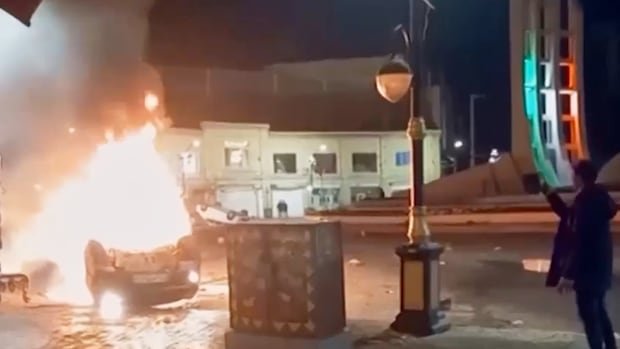

Nationwide protests against Iran’s theocracy have now spanned two weeks, with activists reporting at least 116 deaths in the violence surrounding the demonstrations. Due to the internet blackout and severed phone lines in Iran, monitoring the protests from outside the country has become more challenging. The U.S.-based Human Rights Activists News Agency confirmed the death toll of 116 people and disclosed that over 2,600 individuals have been detained.
Iranian state TV has been reporting on security force casualties, emphasizing control over the nation, while refraining from mentioning the deceased protesters, whom they now label as “terrorists.” Supreme Leader Ayatollah Ali Khamenei has hinted at an impending crackdown, disregarding warnings from the United States. Iran’s attorney general, Mohammad Movahedi Azad, escalated the threats by announcing that participation in protests will be considered a capital offense of being an “enemy of God.”
Expressing support for the protesters, U.S. President Donald Trump took to social media, stating that “Iran is looking at FREEDOM, perhaps like never before. The USA stands ready to help!!!” The U.S. State Department also issued a strong warning not to underestimate President Trump’s resolve when he makes promises.
In response to the escalating tensions, Iran’s parliament speaker cautioned that the U.S. military and Israel would be legitimate targets if the U.S. were to strike Iran. Meanwhile, Canada’s foreign affairs minister, along with Australian and European counterparts, praised the bravery of the Iranian people standing up for their rights amid the protests.
Conflicting reports emerged as Iranian state TV portrayed a semblance of peace in the country, while online footage contradicted these claims, showing demonstrations in Tehran. The Fars news agency released surveillance footage showing violent clashes, including attacks on government facilities, in several cities.
Plans for further protests over the weekend were announced by Iran’s exiled Crown Prince Reza Pahlavi, urging demonstrators to reclaim public spaces using national symbols from the pre-revolution era. The protests, triggered by economic grievances and dissatisfaction with the ruling regime, have intensified, challenging Iran’s theocracy.
International airlines have suspended flights to Iran, citing safety concerns amid the ongoing unrest. As the situation remains volatile, fears of a violent crackdown persist, especially with the internet shutdown enabling security forces to suppress dissent forcefully.