
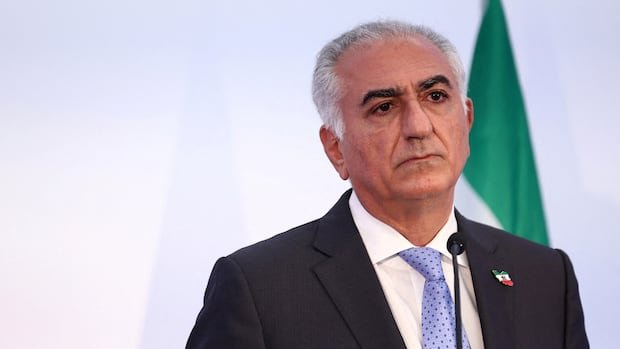

The son of the former shah of Iran has emerged as a leading figure encouraging protestors participating in the largest anti-government demonstrations in years, despite residing outside Iran since the late 1970s. Reza Pahlavi, often portrayed as disconnected and corrupt by Iranian state media, has utilized social media videos and Farsi-language news outlets like Iran International to amplify his calls for protests. He has consistently lauded Iranians advocating for change and has called for an end to oppressive measures.
In a recent CBS News interview, Pahlavi appealed to U.S. President Donald Trump to intervene in support of the Iranian protestors. He emphasized the importance of Trump making a decision promptly. Trump has expressed willingness to support Iranians if security forces resort to violence but has also indicated hesitance in meeting with Pahlavi.
Pahlavi clarified in the CBS interview that he did not instigate people to protest against the regime but responded to their plea for assistance in voicing their concerns to the world. He acknowledged the risks involved in such movements, stating, “This is a war, and war has casualties.”
Advocating for a ‘secular, democratic’ Iran, Pahlavi’s level of support within Iran, where he has not visited in years, remains uncertain. Some protestors have expressed backing for him through verified social media videos, chanting phrases like “Long live the shah,” indicating a potential resonance with his messages. Others demand broad political reforms, using slogans such as “Down with the dictator” in reference to Supreme Leader Ayatollah Ali Khamenei.
Pahlavi has consistently called for change during periods of unrest, including the 2009 mass protests and the 2022 nationwide demonstrations following the death of Mahsa Amini. Despite being declared shah by the exiled royal court in 1980 after his father’s passing, Pahlavi faces a diverse opposition lacking a singular leadership figure like Ayatollah Ruhollah Khomeini in the 1979 revolution.
In his recent messages, which have been censored by the Iranian government amid internet shutdowns, Pahlavi has indicated his readiness to lead a transition towards a democratic future. Expressing openness to a constitutional monarchy with an elected ruler, he emphasizes the people’s right to choose their leadership while advocating for an end to theocratic governance.
Born in 1960, Pahlavi was designated crown prince in 1967 during his father’s coronation in Tehran. He departed Iran in 1978 for flight training in the U.S., shortly before his father’s exile. Following his father’s demise, Pahlavi assumed the shah role on his 20th birthday in 1980.
Pahlavi has garnered support in the diaspora, particularly among Iranians in the U.S., through his critiques of Iran’s leadership and calls for reform. Despite his alignment with Israel and the U.S. on certain matters, his efforts to gain significant backing from foreign governments, including in Washington and European capitals, have seen limited success.