

Adriana Avelina Ruíz Márquez utilizes false eyelash adhesive to affix a small transmitter to the thorax, just behind the head, of the monarch butterfly. Weighing approximately half a gram, the butterfly effortlessly carries the 60-milligram device, which features a solar panel the size of a grain of rice. After the meticulous procedure, which also involves a toothpick and a Q-Tip, Ruíz Márquez releases the butterfly, and it swiftly takes flight by flapping its wings.
This innovative tracking device, employed for the first time in Mexico to tag monarchs before their northward migration to the U.S. and southern Canada, is anticipated to unravel some mysteries surrounding the insects. Ruíz Márquez expressed her belief that utilizing people’s smartphones to monitor their movements will shed light on questions related to their migration route, behavior upon arrival, and departure patterns.
The El Rosario butterfly sanctuary, nestled amidst the towering oyamel firs in mountainous Michoacán state, serves as a critical overwintering site for the vast majority of North America’s monarchs east of the Rocky Mountains. Part of the Monarch Butterfly Biosphere Reserve, the sanctuary, along with five others, sprawls across Michoacán and the State of Mexico, encompassing a protected area of around 135 square kilometers.
Teams from the federal Commission for National Natural Protected Areas and World Wildlife Fund (WWF) Mexico have equipped a total of 160 monarchs throughout the reserve, including 40 in El Rosario, with the new transmitters. This initiative aims to offer unprecedented insight into the initial phase of the butterflies’ migration north, as highlighted by biologist Eduardo Rendón Salinas from WWF Mexico.
The monarch butterflies embark on a multi-generational journey north that spans up to 5,000 kilometers, with the exceptional super generation undertaking the southward migration in one continuous flight. These monarchs, emerging from regions like the Prairies to the Maritimes, traverse through the U.S. Northeast and Midwest, before returning north after mating in sanctuaries like El Rosario.
The newly integrated microchipped transmitters emit detectable signals that can be picked up by nearby iPhones, facilitating crowd-sourced tracking of the butterflies’ trajectory. By leveraging the Project Monarch app or a handheld receiver, anyone can partake in mapping the butterflies’ path, offering a level of spatial precision previously unattainable.
Previously reliant on wing tags that provided limited insights, scientists are now poised to harness the nuanced movements during the migration period, thanks to the enhanced capabilities of the transmitters. Plans are underway to enhance the devices to enable Android smartphones to serve as passive detectors, further bolstering the monitoring efforts.
The successful deployment of the transmitters in a continent-wide monarch tracking project underscores the collaborative efforts of over 20 groups. The monarchs tagged from Canada to Cuba were closely monitored as they traversed into Mexico’s Monarch Butterfly Biosphere Reserve, marking a significant milestone in tracking and understanding their migration patterns.
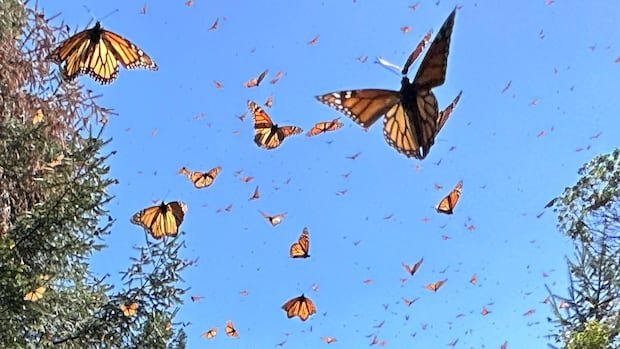
As the reserve transforms into a butterfly haven between November and March, the monarchs dominate the landscape, clustering on oyamel branches to weather the winter. The local community, custodians of the El Rosario ejido, diligently safeguard the sanctuary from illegal activities, ensuring the monarchs’ safety and preservation of their natural habitat.
The community’s eco-tourism initiatives not only sustain their livelihood but also contribute to the conservation efforts by nurturing oyamel seedlings to maintain a healthy forest ecosystem. Guarding this natural wonder, the monarch butterfly, is a source of pride and responsibility for the people of El Rosario, who cherish their unique connection to this captivating phenomenon.