
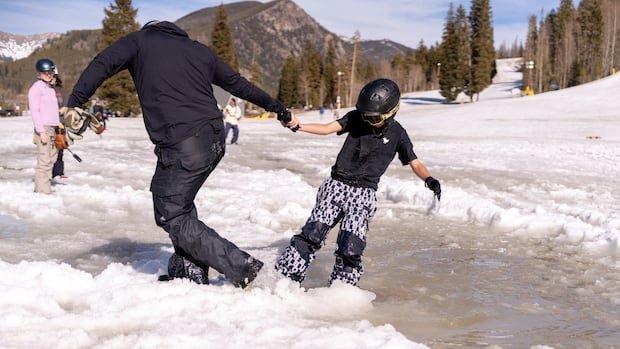

Mountains in the western U.S., typically covered in March snowpack, are now brown due to a recent heatwave. Concerns are rising about an impending severe fire season. Climatologist John Abatzoglou from the University of California Merced warns of potentially dangerous fire conditions across the region as heatwave records were shattered in March.
Following a prolonged period of temperatures well above average, the heatwave finally subsided over the weekend. Experts attribute this extreme warmth to climate change caused by human CO2 emissions. The unseasonably warm weather has accelerated snowmelt, leading to record-low snowpack levels across western U.S. ski destinations.
The rapid snowmelt has set the stage for an early and intense fire season. Colorado, for instance, experienced record-low snowpack levels this winter, with snow disappearing much earlier than usual. This has prompted an early start to wildfires in states like Colorado and Nebraska, where thousands of hectares have already been engulfed in flames.
In California, reports of wildfires have emerged, signaling the heightened fire risk in the region. The dry conditions have made the grasslands susceptible to fire outbreaks. The scorching temperatures, which are significantly above normal, have accelerated vegetation drying, further increasing the fire hazard.
Research indicates that dwindling snowpack levels contribute to intensified wildfires. Reduced snowpack results in drier, more flammable trees, paving the way for severe fires that can destroy entire ecosystems. The aftermath of such fires may lead to the conversion of forests into grasslands or scrublands, altering the landscape’s carbon storage capacity and affecting water sources.
To mitigate these risks, experts emphasize the importance of snowpack accumulation. While climate change poses long-term challenges, snowy winters driven by weather patterns like El Niño and La Niña offer opportunities for prescribed burning to reduce wildfire fuels. These controlled fires are more manageable in wetter conditions and can help curb the severity of future wildfires.
In Canada, low snowpack levels also pose a significant wildfire risk, particularly in the western regions. However, factors like extreme heat and drought can exacerbate wildfire conditions, as observed in Manitoba’s severe wildfires last year. With rising temperatures and ongoing droughts, many parts of Canada remain vulnerable to intense fire seasons.
Despite the current fire threat, there is still hope for a change in the risk landscape. While the western U.S. faces a widespread fire danger, timely rainfall in April could potentially mitigate the looming wildfire crisis.