
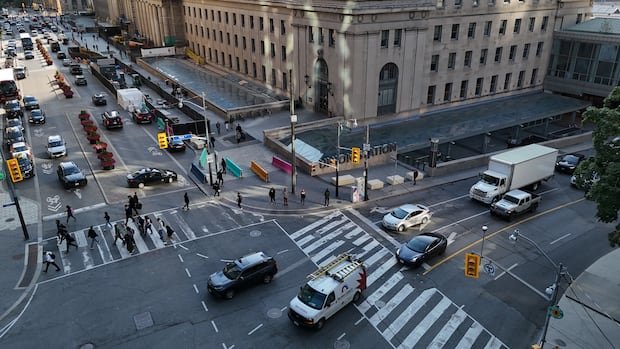

Last year, Toronto experienced its lowest number of traffic-related fatalities in a decade, coinciding with the removal of a significant road safety initiative in the city. According to the most recent data, there were 39 deaths on Toronto’s roads in 2025, fewer than in 2020 when pandemic restrictions led to reduced street traffic. These fatalities included 19 pedestrians, 12 motorists, five motorcyclists, two cyclists, and one involving “micromobility” users such as electric bike, e-moped, and e-scooter riders.
This marked a significant decrease from a decade ago when the city witnessed a peak in traffic deaths, with 78 fatalities recorded in 2016, over half of which were pedestrians. In response to this alarming trend, the City of Toronto introduced its Vision Zero strategy aimed at eradicating traffic-related deaths. The strategy encompasses various safety measures such as street redesigns to discourage speeding, as well as the implementation of speed cameras and red light cameras.
Over the past decade since the strategy’s inception, there has been a general downward trend in traffic fatalities. Vision Zero’s projects manager, Sheyda Saneinejad, highlighted that the strategy received its largest budget in 2025, allowing for expansion and record-breaking program achievements. However, despite these advancements, one critical component of the program, the city’s speed cameras, which had doubled in number to 150 in 2025, were removed in the fall due to new provincial legislation.
The removal of speed cameras has sparked concern among road safety advocates, including Lauren Fisher from CAA, who emphasized the importance of these cameras in reducing speeding and preventing accidents. Premier Doug Ford and his government have criticized speed cameras as ineffective and opted for large warning signs to deter speeding. This decision has raised apprehension among advocates like Jess Spieker, who fears for the safety of school zones in 2026, where many cameras were previously installed.
Despite the setback of losing speed cameras, Vision Zero’s manager, Saneinejad, assured that multiple safety measures, including speed humps, cushions, school crossing guards, and red light cameras, are in place to maintain road safety. While progress has been made towards achieving the Vision Zero goal, Spieker emphasized that there is still a long way to go, particularly in ensuring the safety of pedestrians who remain vulnerable to road accidents due to street designs that prioritize vehicle speed over safety.