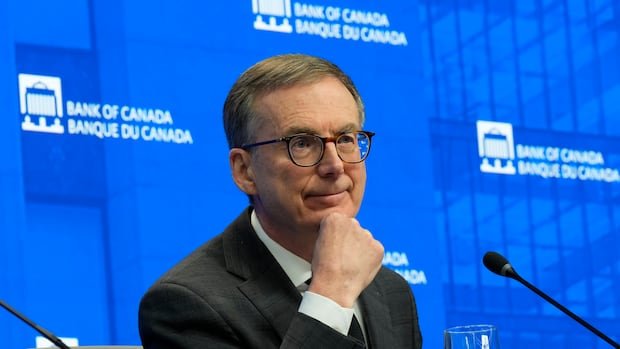

The Bank of Canada has decided to maintain its key interest rate at 2.25 percent for the second consecutive meeting. However, the future trajectory of the rate could be influenced by the ongoing free trade negotiations with the U.S. and Mexico, which pose significant risks for the country.
During a news conference in Ottawa, Governor Tiff Macklem stated that the central bank’s economic outlook has not seen significant changes since its previous projection in October. Despite this, Macklem emphasized that there is increased uncertainty surrounding the forecast, with a wider range of potential outcomes than usual. Factors such as the unpredictable U.S. trade policy and heightened geopolitical risks are contributing to this uncertainty.
The upcoming review of the Canada-U.S.-Mexico Agreement (CUSMA) is identified as a major source of economic uncertainty and a crucial risk to Canada’s economic prospects. Macklem pointed out that the era of open, rules-based trade with the United States has ended, necessitating adjustments to this new reality.
Macklem also highlighted that Canada’s efforts to diversify its trade relationships may not fully offset the structural damage caused by the U.S. trade war. When asked about the impact of the CUSMA negotiation on future interest rate decisions, Macklem acknowledged that it poses a significant risk to the central bank’s projections.
Moreover, ongoing challenges to the independence of the U.S. Federal Reserve are adding to the heightened economic uncertainty globally, including in Canada. Macklem expressed support for U.S. Fed Chair Jerome Powell, emphasizing the importance of the Fed’s independence for the global economy.
Looking ahead, the Bank of Canada anticipates modest GDP gains in 2026-27, with the inflation rate expected to remain close to the two percent target. Despite challenges from U.S. protectionism affecting Canadian exports, domestic spending is showing signs of improvement. The central bank foresees a rebound in business investment and employment growth, although the unemployment rate remains elevated at 6.8 percent.
The Bank of Canada projects a 1.1 percent annual average GDP growth rate for 2026 and 1.5 percent for 2027, aligning with its previous forecasts. Governor Macklem reaffirmed that the current interest rate is suitable for maintaining inflation near the target level but emphasized the bank’s readiness to adjust its stance if the economic outlook changes.
Economists anticipate no further interest rate changes in 2026, with a possibility of a rate cut due to uncertainties in trade negotiations and existing economic slack. The central bank’s cautious approach reflects concerns about trade uncertainties and a deceleration in underlying inflation.