
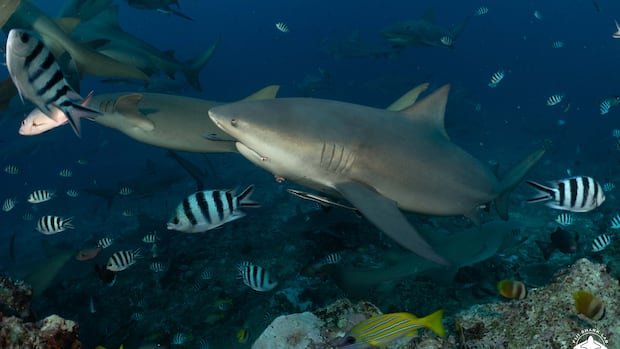

A recent study published in the journal Animal Behaviour reveals that bull sharks, typically known for their solitary and aggressive nature, have been observed displaying social behaviors and forming friendships. Conducted over six years in the Shark Marine Reserve in Fiji, the research involved extensive underwater observations on 184 bull sharks of varying ages.
Lead author Natasha Marosi, a PhD student in animal behavior at the University of Exeter and founder of the Fiji Shark Lab, noted intriguing social interactions among the sharks, including synchronized swims and lead-follow behaviors. The study highlighted that adult sharks, particularly females, preferred to associate with others of similar sizes, indicating selectivity in their social interactions.
According to Marosi, the findings shed light on how sharks interact, learn from each other, and potentially cooperate while hunting. The research also aims to challenge misconceptions about sharks as mindless predators and emphasize their social nature. This understanding could be crucial in assessing their ability to adapt and survive in the face of environmental challenges like overfishing and pollution.
Experts like Toby Daly-Engel from the Florida Institute of Technology emphasize the importance of recognizing sharks as social animals with unique behaviors and relationships. The study’s findings, supported by previous research using tracking methods, suggest that shark interactions are natural and not solely influenced by human observation. This insight contributes to a broader perspective on shark behavior and highlights the need for conservation efforts to protect these fascinating creatures.