
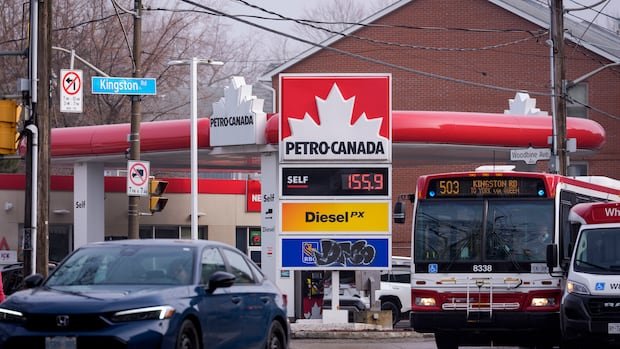

Fuel prices in Canada have surged this week due to the ongoing conflict in the Middle East impacting oil prices. As of the latest data, the average retail price per litre in Canada has reached 150 cents, a significant increase from the previous week’s 133.4 cents. British Columbia is experiencing the highest prices at 168.6 cents per litre.
The escalation in prices follows the recent attacks between Israel, the United States, and Iran, resulting in casualties, evacuations, and a humanitarian crisis. The conflict has disrupted oil tanker traffic in the vital Strait of Hormuz, a key passage for a fifth of the world’s oil supply.
Benchmark crude oil prices in the U.S. hit a two-year peak on Friday, surpassing $90 US per barrel for the first time since October 2023. Despite this, there are no reported fuel supply disruptions affecting Canada or the U.S. as both countries produce sufficient oil domestically.
According to Gasbuddy petroleum analyst Matt McClain, while there may not be supply issues, consumers could face higher prices depending on the conflict’s outcome. Drivers filling up their tanks expressed concerns about the rising costs, impacting their budgets and daily expenses.
In Saint John, N.B., Bailey Jones shared similar sentiments, acknowledging the inevitability of price hikes and the necessity of gas for daily activities. Experts predict that the elevated fuel prices may persist even after the conflict resolves, potentially lasting for a few months.
Warren Mabee, director of the Institute for Energy and Environmental Policy at Queen’s University, anticipates a prolonged period of fluctuating prices post-conflict. He expects gas prices to rise by five to ten percent higher than pre-conflict levels.