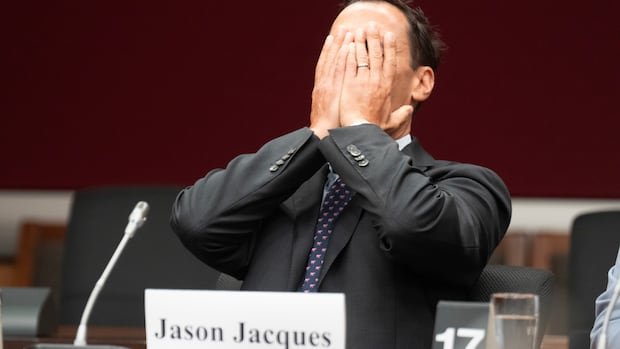

This year will witness changes for Canada’s fiscal watchdog as Interim Parliamentary Budget Officer Jason Jacques is set to either be replaced or appointed permanently, and the Organization for Economic Co-operation and Development (OECD) is gearing up to release its evaluation of the office.
Although the OECD’s report is still a few months away, Jon Blondal, who heads the OECD’s public management and budgeting division overseeing the assessment, shared with CBC News that the feedback received thus far has been positive. He expressed admiration for Canada having the PBO, noting its wide respect across stakeholders.
While economists in Canada acknowledge the PBO’s strong reputation, they emphasize the need for enhancements. They advocate for a focus on presenting more data and less commentary by the office’s leadership, suggesting increased peer review utilization for reports whenever feasible.
These proposed improvements aim to bolster the office’s perceived objectivity and its capability to spot potential inaccuracies or misinterpretations in a politically charged setting. Trevor Tombe, director of fiscal and economic policy at the University of Calgary’s school of public policy, highlighted the inevitability of disagreements in analyzing complex policies with forward-looking implications.
Former chief economist for TD Bank, Don Drummond, concurred that analyzing significant figures and intricate economic models is challenging and can lead to errors, emphasizing the importance of post-analysis actions. Notably, he cited economist Edmund Clark, his former TD boss, who underlined the significance of responses following initial errors.
The call for reduced commentary stems from Jacques’s contentious appearance before a parliamentary committee in September, where he used strong language to describe Canada’s federal finances. The insistence on a neutral stance without venturing into policy implications is highlighted by former PBO Kevin Page and echoed by Don Drummond, acknowledging the concerning numbers despite reservations about the language used.
The discussion around sustainability diverges among experts like Christopher Ragan, who deems Canada’s finances sustainable at present but warns of vulnerability to major shocks. The potential impact of hitting the debt limit on Canada’s credit rating and borrowing capacity underscores the importance of drawing conclusions from factual data rather than commentary.
Blondal mentioned that the upcoming OECD review will evaluate the PBO against nine key principles, including external evaluation through peer review. The debate around the PBO’s carbon pricing analysis serves as a case in point, with calls for broader peer review to ensure comprehensive and balanced assessments.
Despite past controversies, Jacques remains open to expanding peer review practices and implementing OECD recommendations to enhance the office’s operations. Notwithstanding potential controversies, Jacques emphasizes the office’s mandate to provide crucial data for parliamentary deliberations.
The forthcoming OECD report is anticipated to shed light on the PBO’s peer review practices, marking a significant milestone in the office’s history. Jacques, proud of initiating this external evaluation, is committed to implementing the OECD’s suggestions, irrespective of his future in the office.