
In a significant development for First Nations, the year 2025 concluded with the Canadian government once again facing Indigenous communities in court, attempting to restrict its legal obligation to provide essential services to Indigenous children. Despite its efforts, the government was unsuccessful in its challenge, marking a continuation of the ongoing legal battle.
On December 20, 2024, the Trudeau administration initiated legal proceedings against the Canadian Human Rights Tribunal to challenge a ruling mandating action on a backlog of requests under the Jordan’s Principle initiative. A year later, on December 15, 2025, the Carney government suffered a defeat in a landmark Jordan’s Principle case at the Federal Court of Appeal. This decision reinforced the legal responsibilities of the government towards Indigenous communities.
While these legal battles framed the year with familiar disputes, 2025 also witnessed significant shifts in Indigenous political landscapes. Here are some key events from the past year.
### Persistent Challenges in Providing for First Nations Children
Ongoing issues plagued the Jordan’s Principle program, characterized by a growing backlog of requests. Indigenous Services Canada introduced a controversial operational bulletin that restricted the services eligible for funding, causing disruptions in crucial programs.
Reports emerged of adverse impacts on Indigenous communities due to the changes. The Cree community of Kashechewan had to halt a suicide-prevention program, while a family in southern Ontario faced challenges securing funding for their autistic son’s education. Additionally, eight-year-old Ethan Maracle lost funding for his schooling due to the changes.
Individuals affected by these alterations fought back through legal means, resulting in victories against the government, such as the case of First Nations grandmother Joanne Powless. The ongoing struggle primarily revolves around the future of the on-reserve child welfare system.
### Shifting Dynamics in Ottawa
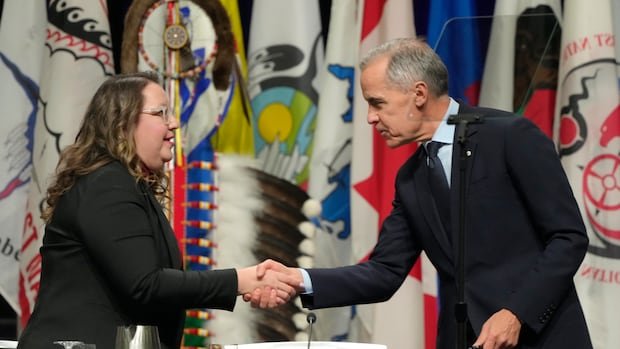
The entrance of Prime Minister Mark Carney ushered in significant political changes in the capital, attracting early criticisms from Indigenous leaders. Amid discussions about imposing pipelines on Indigenous territories, demands for inclusion and threats of protest movements surfaced.
In response to mounting concerns, the government organized a series of summits during the summer to address Indigenous leaders’ apprehensions. Despite varied responses ranging from staunch resistance to enthusiastic support, frustrations lingered over the perceived lack of consultation preceding major legislative actions.
The Assembly of First Nations unanimously passed a resolution in early December, calling for the withdrawal of a memorandum of understanding with Alberta pertaining to pipeline and energy projects. Carney engaged directly with chiefs to address their concerns, highlighting the complexities of balancing government projects with Indigenous consent.
### Landmark Ruling in Cowichan Case
In a significant legal development, a B.C. Supreme Court judge ruled in early August that the Cowichan Tribes hold Aboriginal title to specific lands in the City of Richmond. The decision, following an exhaustive legal battle spanning over a decade, raised questions about coexisting Aboriginal title and private property rights.
The aftermath of the ruling brought about uncertainties regarding the implications and the potential for future appeals. The complex nature of the case underscores the ongoing challenges in navigating Indigenous land rights within the legal framework.
### Unprecedented Métis Political Trial
A nine-week civil trial concluded in March, pitting Métis leaders against each other in a multimillion-dollar lawsuit filed by the Métis National Council (MNC) president against her predecessors. The trial involved allegations of financial mismanagement related to a veterans recognition program.
Following testimony from federal officials and a scathing judgment by Ontario Superior Court Justice Loretta Merritt, the Manitoba Métis Federation emerged victorious, with the MNC facing significant repercussions. The ruling emphasized the importance of resolving political disputes through proper channels and accountability in leadership.
These events from 2025 highlight the ongoing complexities and challenges within Indigenous political landscapes, underscoring the need for continued dialogue and action to address critical issues affecting Indigenous communities.