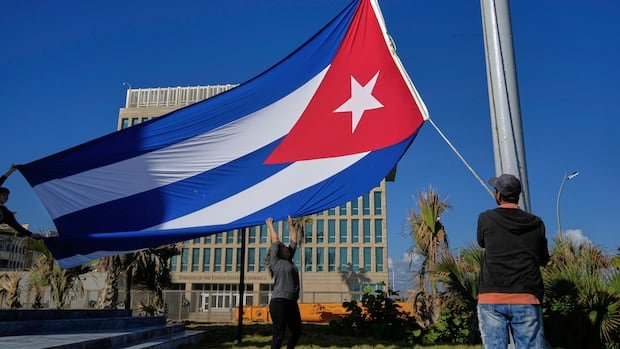

Cuban authorities expressed grief on Monday by lowering flags early in the morning to mourn the reported deaths of 32 security officers in Venezuela due to a recent U.S. strike. Cuba and Venezuela share a close relationship, with Cuban soldiers often serving as bodyguards for Venezuelan President Nicolás Maduro. The economic support from Venezuela’s petroleum has been crucial for Cuba’s struggling economy.
The U.S. administration has indicated that removing Maduro from power would be a strategic move against the Cuban government. The potential fallout of severing ties between Cuba and Venezuela is a matter of concern for Cuban leaders, who have denounced the attack as “state terrorism.”
President Trump has suggested that Cuba’s economy will suffer further if Maduro is ousted, implying a grim future for the island nation. The intertwined fates of Cuba and Venezuela have raised uncertainties among Cuban citizens, who face challenges such as power outages and food shortages.
The possibility of losing oil supply from Venezuela poses a significant threat to Cuba, as the country heavily relies on this resource. The impact of potential oil disruptions raises questions about Cuba’s energy security and economic stability. The prospect of Russia stepping in to fill the oil gap remains uncertain, as experts debate whether Russia would be willing to provide the necessary support to Cuba.
Amidst these challenges, there are calls for Cuba to explore alternative solutions, such as engaging with the private sector and seeking assistance from other international partners like China. The evolving situation in the region underscores the complexities and uncertainties facing Cuba in the aftermath of the U.S. strike in Venezuela.