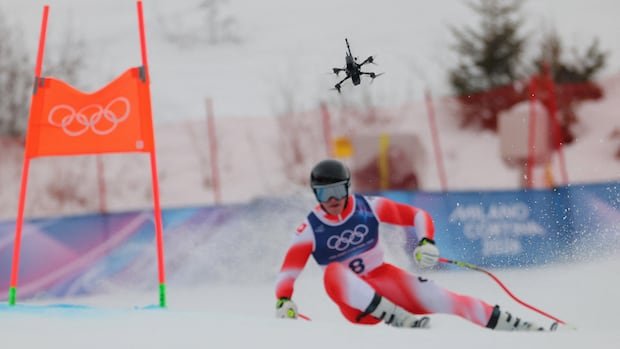

As Canadian athlete Megan Oldham prepared for her final run in the freeski slopestyle event, which ultimately earned her an Olympic bronze medal, viewers were captivated by the presence of a drone following her closely, providing a unique perspective to Olympic coverage.
The use of drones by the Olympic Broadcasting Services has garnered attention from viewers across various Olympic sports, from luge to alpine skiing. These drones, known as first-person view (FPV) drones, are capable of high-speed maneuvers, closely tracking athletes’ movements with precision.
While drones have been utilized in the Olympics since 2014, the introduction of FPV drones represents a new technological advancement in capturing the action. Operated by skilled pilots using specialized equipment, these drones can reach speeds of up to 75 km/h and navigate challenging terrains like alpine slopes and luge tracks.
The intricacy and dedication behind the drone coverage at the Olympics have not gone unnoticed, with experts highlighting the extensive preparation and simulation involved in delivering such immersive viewing experiences. The pilots operating the drones have dedicated significant time and effort to ensure viewers are brought as close as possible to the athletes’ experiences.
Despite the technical achievements, the use of drones has faced some criticism, particularly regarding the noise generated by the drones during broadcasts. Some viewers have likened the drone buzz to the vuvuzelas from the 2010 soccer World Cup, which at times overshadowed the event’s audio.
Athletes have also shared mixed reactions to the drones, with some expressing concerns about the proximity of the drones to the action. However, many have acknowledged the innovative nature of the drone shots and their contribution to enhancing the overall Olympic experience.
According to Pierre Ducrey, the International Olympic Committee sports director, while the integration of drones may require an adjustment period for viewers, it adds significant value to the coverage of the Olympics. The evolving technology offers a fresh perspective on the athletic performances, providing a new dimension to the audience’s viewing experience.