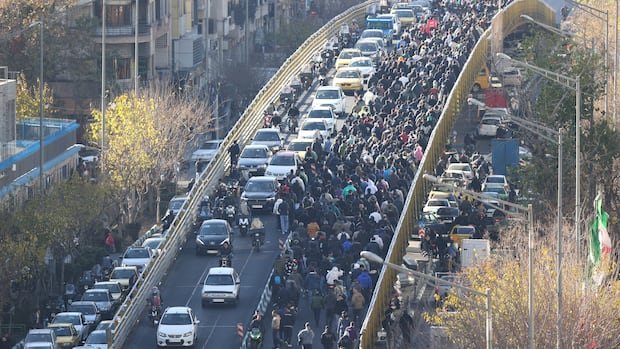

Protesters expressing frustration over Iran’s struggling economy staged a sit-in at Tehran’s Grand Bazaar on Tuesday, witnesses reported. Security forces later dispersed the demonstrators with tear gas as the market closed down. The protest at the Grand Bazaar, a historic hub of Iran’s economic and political activities, indicated ongoing unrest as the national currency, the rial, hit a new low on Tuesday.
Rights groups have reported that at least 25 individuals have died in Iran during the initial nine days of protests, which initially began at the bazaar due to economic concerns such as the currency devaluation and high inflation. The demonstrations have extended to some cities in western and southern Iran but have not reached the level of the widespread unrest witnessed in recent years.
According to Hengaw, a Kurdish Iranian rights organization, the death toll stands at 25, including four minors, with over 1,000 arrests. Another network of activists, HRANA, has reported 35 fatalities, including two law enforcement officers, and 1,203 arrests as of Tuesday. The figures have not been independently confirmed by Reuters.
Despite being relatively smaller, the protests have evolved beyond economic grievances to encompass broader dissatisfaction, with some protesters voicing opposition to the country’s clerical leadership. The situation is expected to deteriorate further following Iran’s Central Bank’s decision to significantly reduce subsidized exchange rates for dollars, likely leading to price hikes that will further strain the population already grappling with years of economic sanctions.
President Masoud Pezeshkian has acknowledged the government’s limitations in addressing the crisis and emphasized the need for collective action. International pressure on Iran persists, with U.S. President Donald Trump warning of potential intervention in support of Iranian protesters. In response, Iran’s Supreme Leader Ayatollah Ali Khamenei reaffirmed the country’s resistance to external interference.
In the Grand Bazaar, demonstrators staged a sit-in while adjacent shops closed, prompting security forces to deploy tear gas to disperse the crowd. Iranian state media did not immediately acknowledge the incident, which has become a common occurrence since the protests commenced. The unrest coincides with recent military actions against Iran by Israel and the U.S., complicating the domestic situation in the country.
Authorities in Iran have refrained from disclosing the exact number of protester casualties but have confirmed the deaths of two security personnel and injuries to several others. Law enforcement officials have differentiated between peaceful protesters and violent rioters, vowing to address the latter with force. The protests, which have transcended economic grievances to encompass broader societal issues, have spread across numerous provinces in Iran.
Pezeshkian has advocated for dialogue and promised reforms to stabilize the economy and safeguard citizens’ purchasing power. The government plans to implement subsidy reforms to bolster essential goods’ affordability for Iranians. Additionally, a new central bank chief was appointed as the rial continued to depreciate amidst the ongoing protests.