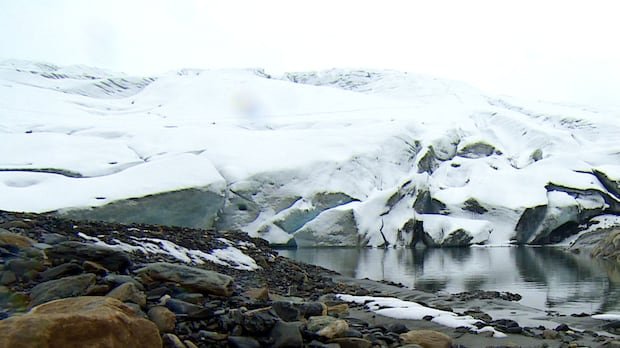

Northern British Columbia faced the second worst year for glacier loss in 2024, despite the United Nations designating 2025 as “The International Year of Glaciers’ Preservation.” Brian Menounos, a climate researcher and professor at the University of Northern British Columbia, emphasized the rapid disappearance of glaciers, surpassing previous projections. Menounos estimated the loss of approximately 30 gigatonnes of glacial ice in the region, equivalent to the entirety of B.C.’s Okanagan Lake.
The primary driver of glacier loss is attributed to warmer temperatures, largely influenced by escalating greenhouse gas emissions from fossil fuel use. Menounos, along with an international team of researchers, utilized satellite and aircraft observations, along with on-site sampling, to monitor global glacial health. Their findings, published in a peer-reviewed study, reported unprecedented ice loss in Western Canada, the Conterminous U.S., and Switzerland between 2021-2024.
The accelerated glacier melt is exacerbated by warmer conditions altering snow reflectivity, creating a feedback loop that intensifies melting. Mark Ednie, a glaciologist with the Geological Survey of Canada, highlighted the global trend of glaciers shrinking, thinning, and losing mass, emphasizing the critical impact on water resources for various sectors like industry and agriculture.
The loss of glacial ice in British Columbia not only affects water resources essential for fish runs and hydroelectric power but also underscores the broader environmental and economic repercussions. As governments aim to balance climate action with economic growth, the tension between preserving glaciers and sustaining economic activities remains a critical challenge. Menounos emphasized the high cost associated with fossil fuel reliance, urging a reevaluation of the trade-offs between economic prosperity and environmental sustainability.