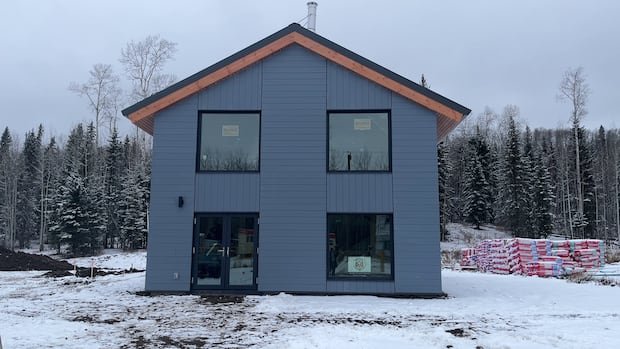

In the Nak’azdli Whuten community near Fort St. James, B.C., a unique home has been built, representing a groundbreaking approach to Indigenous-led housing. This innovative prototype utilizes locally-sourced low-grade wood to create prefabricated housing kits tailored for northern communities. The process involves harvesting trees from the local area, milling them on-site, and employing local workers to construct panels for rapid house assembly.
Elky Taylor, a member of Nak’azdli Whuten, emphasized the significance of this housing project, stating that it not only provides housing security but also economic opportunities and long-term community sustainability. The initiative aims to establish a secondary industry utilizing the region’s timber resources, offering hope for the success of this initial endeavor.
The collaborative effort between Nak’azdli Whuten Development Corp., Deadwood Innovations, and the University of Northern British Columbia’s Wood Innovation Research Lab led to the development of a prefabricated mass timber panel system. This system, spearheaded by the model home, showcases the utilization of mass timber construction typically seen in urban settings for rural community housing.
The utilization of mass timber, which involves bonding wood layers to create durable structural components, is a departure from the conventional use of this material in large-scale urban projects. The CEO of Deadwood Innovations, Owen Miller, emphasized the focus on sustainability, affordability, and alignment with community needs in constructing homes built to endure using local resources and expertise.
The prefabricated nature of the panels ensures enhanced quality control compared to traditional on-site construction, as highlighted by Jianhui Zhou, an associate professor at UNBC specializing in wood engineering. This approach not only streamlines the construction process but also enables the utilization of local materials to address housing shortages in Indigenous and northern communities.
John-Paul Wenger, CEO of Nak’azdli Whuten Development Corp., envisions commercializing mass timber housing production within the region, with the potential to significantly increase housing availability. The model home, featuring mass timber panels on three sides, offers a glimpse into the possibilities of this innovative construction approach.
Architect Neil Prakash noted the shift from watching logging trucks leaving the community to seeing finished building panels being produced locally. The production of mass timber panels at the former Tl’oh Forest Products plant in Fort St. James signifies a strategic use of existing facilities to support local construction endeavors.
The flexibility of the panel system allows for custom designs ranging from cabins to larger houses, tailored to meet the diverse needs of different communities. This localized approach not only supports the local market but also enhances opportunities for regional employment and community engagement.
The model home will serve as a showcase for the next year and a half before being gifted to a Nak’azdli family or elder. The pilot project has generated enthusiasm within the community, instilling pride and a sense of readiness to embrace future housing developments.