
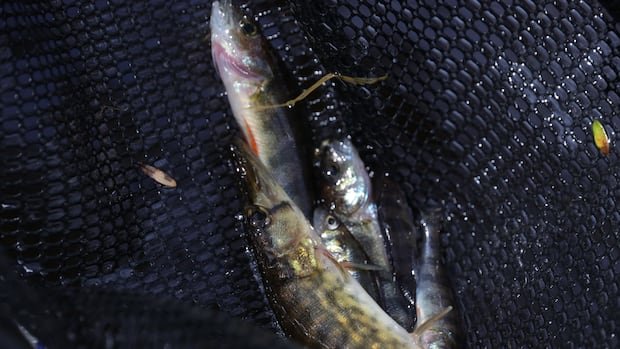

Kejimkujik National Park in Nova Scotia has decided to halt its annual brook trout census due to the detrimental impact of an invasive species on the local ecosystem. The census, which began in the 1990s with volunteer fly fishers assisting Parks Canada in monitoring brook trout populations, has been put on hold this year.
Parks Canada disclosed to CBC News that the census suspension is a result of the prevalence of chain pickerel, accounting for 90% of fish caught in the national park in western Nova Scotia in 2025. The agency stated that the brook trout numbers reported in the census are currently insufficient for statistical analysis due to the invasion of chain pickerel.
Chain pickerel, unlawfully introduced to Nova Scotian waters in 1945, have rapidly spread throughout the province and were first observed in the park in 2018. Once established, they aggressively dominate the ecosystem by preying on various species, including fish, reptiles, frogs, dragonflies, and even ducklings.
Data from the park’s angler diary program revealed a significant surge in catch rates of chain pickerel, escalating from 18% in 2020 to over 80% in the subsequent years. Efforts to contain this invasive species, such as the installation of fish barriers by Kejimkujik staff, have faced challenges due to flooding, rendering them ineffective in preventing the spread.
Despite the setbacks, Parks Canada remains committed to mitigation strategies, with over 5,300 chain pickerel already removed by staff and volunteers. Chain pickerel are mandated for retention at Kejimkujik, prohibiting anglers from releasing them back into the water. Native fish species, including trout, are encouraged to be returned to their habitat.
To continue monitoring brook trout populations, Parks Canada will utilize alternative methods such as the angler diaries program and deploying fyke nets annually in various water bodies within Kejimkujik. Experts suggest shifting conservation efforts to areas not yet invaded by chain pickerel to prevent further ecological disruptions.
Trevor Avery, a biology and mathematics professor at Acadia University, has been studying chain pickerel in Kejimkujik since their introduction. His research team examines the stomach contents of caught chain pickerel, emphasizing their predatory nature and rapid consumption of prey.
Population management options for chain pickerel range from extreme measures like the use of rotenone, a natural fish pesticide, to more moderate approaches such as targeted fishing. While complete eradication may be challenging, sustained fishing efforts could help control the presence of chain pickerel in the park.
Nova Scotia is renowned for its brook trout fisheries, attracting anglers worldwide. Andrew Lowles, a resource manager at the Nova Scotia Department of Fisheries and Aquaculture, acknowledged the historical significance of the region’s fishing legacy. Despite the challenges posed by chain pickerel, they also offer angling opportunities due to their aggressive nature, particularly during the summer months.
The ongoing impact of chain pickerel at Kejimkujik underscores the importance of proactive conservation measures to preserve the park’s ecosystem and native fish species.