
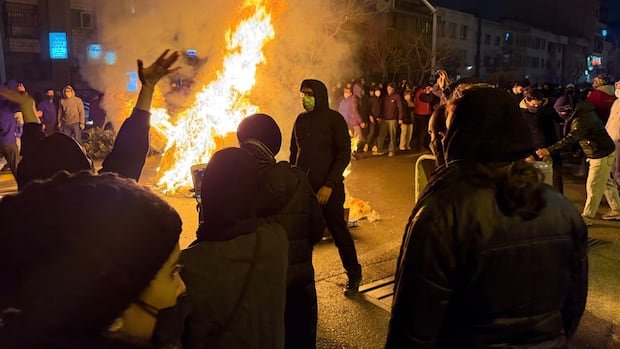

After experiencing internet disruptions in Iran, accurately reporting on overseas demonstrations has been challenging. However, with some communication lines restored on Tuesday, The Associated Press managed to establish contact with individuals in Iran actively participating in the protests.
The protests initially sparked over economic grievances in Iran and swiftly shifted focus towards the theocratic regime, particularly targeting 86-year-old Supreme Leader Ayatollah Ali Khamenei. Visual evidence from Tehran’s demonstrations captured by The Associated Press on Tuesday featured graffiti and chants advocating for Khamenei’s demise, a punishable offense with a potential death penalty.
Skylar Thompson, affiliated with the Human Rights Activists News Agency (HRANA), expressed shock at the rising death toll exceeding 2,000 people related to the demonstrations, surpassing the casualty count of the Mahsa Amini protests in 2022 by fourfold within a fortnight. Thompson highlighted concerns that the death toll might escalate further, asserting that the current figures are likely underestimated.
Subsequent reports from HRANA indicated an increased death toll of at least 2,571 individuals. Iranian witnesses, reconnected with the outside world via phone conversations, described a tense atmosphere in central Tehran with security forces heavily present, damaged government infrastructure, and vandalized bank facilities.
Numerous individuals reached out to The Associated Press from Tehran, providing firsthand accounts of the situation; however, communication was unidirectional as the AP’s Dubai bureau faced challenges in contacting these sources. Witnesses reported ongoing restrictions on text messaging and limited internet access restricted to domestic websites only.
They narrated scenes of heightened militarization, with anti-riot police deployed with protective gear and weaponry, alongside members of the Revolutionary Guard’s Basij force carrying firearms. Plainclothes security personnel were also observed monitoring public spaces, creating an atmosphere of intimidation and surveillance.
The unrest led to the destruction of several banks and government buildings, hampering day-to-day operations and financial transactions due to the internet blackout. Despite the somber circumstances, some shops resumed operations under pressure from security forces, while the Grand Bazaar in Tehran reopened following protests triggered by the currency devaluation.
Citizens expressed apprehension about potential external interventions, speculating on the likelihood of a U.S. military response following President Donald Trump’s statements concerning Iranian affairs. Amidst these uncertainties, security forces reportedly targeted Starlink terminals in Tehran, prompting concerns over heightened surveillance measures within the city.
In a positive development, a Los Angeles-based activist disclosed that Starlink was offering free internet services in Iran, providing a crucial lifeline for communication amidst the ongoing unrest. The initiative received confirmation from multiple sources, ensuring access to essential online resources during the turbulent period.
Additionally, pro-government demonstrations garnered significant support, with tens of thousands participating in rallies across the nation. Supreme Leader Khamenei lauded the demonstrators, condemning foreign interference and emphasizing the strength and resilience of the Iranian people against perceived external threats.
The situation in Iran remains fluid, with the populace navigating through a complex web of socio-political challenges while striving to have their voices heard on the global stage.