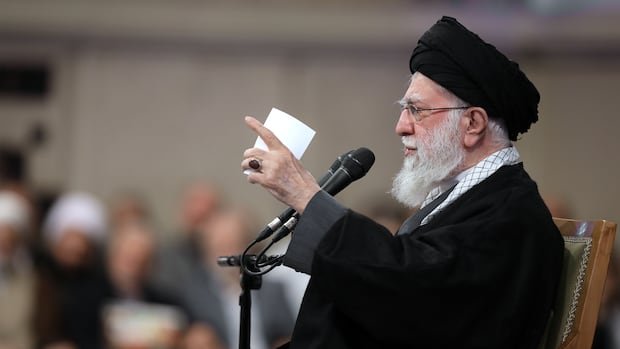

Iran’s supreme leader, Ayatollah Ali Khamenei, emphasized the need to control “rioters” following a series of protests that have rocked the Islamic Republic. The demonstrations, triggered by economic struggles, have resulted in the deaths of at least 10 individuals. The ongoing protests, fueled by frustration over the country’s economic challenges, have drawn attention from U.S. President Donald Trump, who warned Iran against violence towards peaceful protesters and indicated potential U.S. intervention.
The recent unrest, the most significant in Iran since the 2022 demonstrations after the death of Mahsa Amini, has not reached the same scale as previous protests. Amini’s death while in police custody had sparked widespread outrage. In response to the current protests, Iran’s state television broadcasted Khamenei’s remarks in which he distinguished between legitimate concerns and acts of “rioting.”
Khamenei accused foreign powers, particularly the U.S. and Israel, of instigating the protests and blamed them for the country’s economic hardships. The paramilitary Iranian Revolutionary Guards, including the Basij force, have historically suppressed protests in the country under Khamenei’s leadership.
While some officials advocate for dialogue to address protester demands, others support a more forceful crackdown. Past demonstrations have resulted in violent responses from security forces, leading to numerous casualties and detentions. Despite the lack of organized opposition, spontaneous protests continue to challenge the regime.
Recent incidents of violence, including deaths in Qom and Harsin, further escalated tensions. The demonstrations have spread across various provinces, with protesters voicing discontent with the government and economic conditions. Iran’s attempts to address its economic challenges, including halting uranium enrichment, have not yet led to negotiations with the West due to ongoing geopolitical tensions.
The situation in Iran remains volatile as protests persist, prompting concerns about potential escalation and the government’s response.