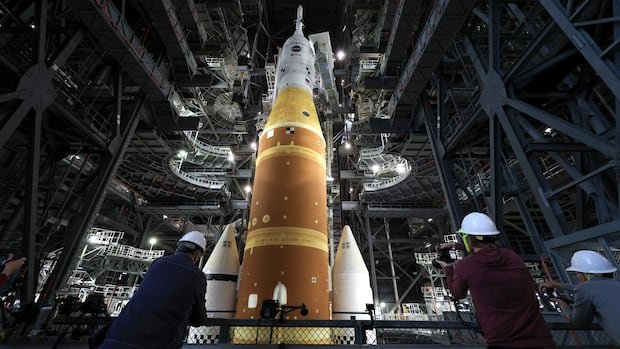

NASA’s Artemis II mission, set for launch on February 8, has been postponed by at least a month due to a hydrogen leak discovered during tank fuelling. The first Artemis mission also encountered delays caused by fuel leaks.
The peculiar properties of liquid hydrogen and liquid oxygen, which form rocket fuel, make them prone to leakage despite their extremely low temperatures. These cryogenic liquids, with boiling points well below freezing, can freeze anything they touch instantly.
To prevent these fuels from vaporizing in the warm Florida air during launch, specialized equipment and insulation are used. The Space Launch System (SLS) rocket’s core stage is coated in insulating foam to maintain the cold fuel’s temperature. However, the cryogenic fuel’s vapor pressure leads to leaks, especially with hydrogen being highly volatile due to its small molecular size.
Efforts to address leaks involve storing the fuels near the launch pad and pre-chilling the rocket’s components to prevent warm air or metal from causing vaporization. The recent delay was caused by a leak in the connector between the launch tower hose and the rocket, a recurring issue that has required repairs and caused past launch delays.
Engineers plan to fix the leak at the launch pad to avoid further delays, with a new launch date set for no earlier than March 6. NASA’s use of liquid hydrogen as fuel, despite its leak challenges, stems from its high thrust-to-weight ratio, vital for heavy lift vehicles like the SLS rocket.
Critics point out the high cost and lack of reusability of the SLS rocket compared to modern, cost-effective rockets used by private companies. NASA’s future with the SLS rocket hinges on resolving hydrogen leaks while balancing costs and job preservation for those involved in its construction.