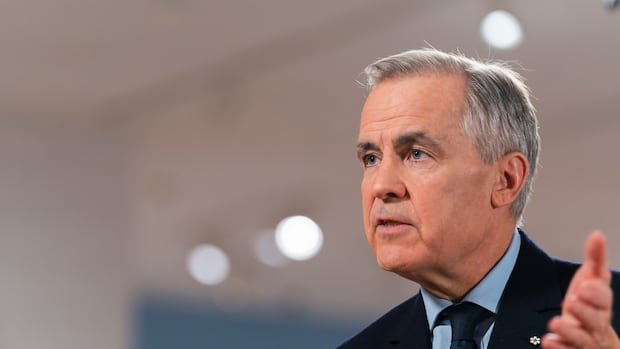

Prime Minister Mark Carney has commenced outlining his perspective on the boundaries of engagement with China as the Canadian government enters a new phase of relations with the economic powerhouse. Carney, who previously labeled China as one of Canada’s primary security concerns, has now openly discussed the need to reset ties with Beijing amid efforts by the Liberal administration to expand trade partners following the trade disputes initiated by former U.S. President Donald Trump.
During an end-of-year interview with CBC News, Carney, responding to a query from chief political correspondent Rosemary Barton, deliberated on the potential risks of Canada aligning economically with China. He emphasized the importance of clearly defining the extent of the relationship and establishing robust safeguards, particularly in sectors like artificial intelligence, critical minerals, and defense, where security risks dictate cautious engagement.
Highlighting the complexities of international partnerships, Carney pointed out that besides the European Union and the United Kingdom, Canada does not maintain deep ties with many countries in these strategic sectors, including its historically close ally, the United States, given the evolving trade dynamics. As Carney expands the scope of trading partners, he stressed the necessity of diversification, cautioning against excessive reliance on any single country, especially the U.S.
Carney identified China and India as crucial countries for bolstering trade relations, signaling a shift from the previous strained interactions under former Prime Minister Justin Trudeau due to various challenges, including the arrest of Huawei’s CFO Meng Wanzhou and subsequent detentions of Canadian citizens in China. The public inquiry into alleged election interference underscored China’s significant role as a persistent foreign threat to Canada.
Acknowledging a pivotal moment in Canada-China relations, Carney accepted an invitation from President Xi Jinping following their meeting at the Asia-Pacific Economic Cooperation summit in South Korea. His approach to governance is set to redefine Ottawa’s stance on Chinese investments, aiming to strike a balance between engagement and addressing contentious issues such as human rights concerns and trade disputes like canola tariffs.
Former Canadian ambassador to China, Guy Saint-Jacques, emphasized the necessity of engaging with China while advocating for a firm stance on critical matters like human rights violations, national security, and democratic values. Saint-Jacques highlighted the importance of establishing clear boundaries and penalties to deter unacceptable behavior from China, stressing the need for the Canadian government to learn from past experiences and strengthen its foreign policy mechanisms.
In conclusion, Carney’s diplomatic overtures to China signal a new chapter in bilateral relations, characterized by a pragmatic approach that prioritizes national interests, economic diversification, and responsible engagement with global superpowers like China.