
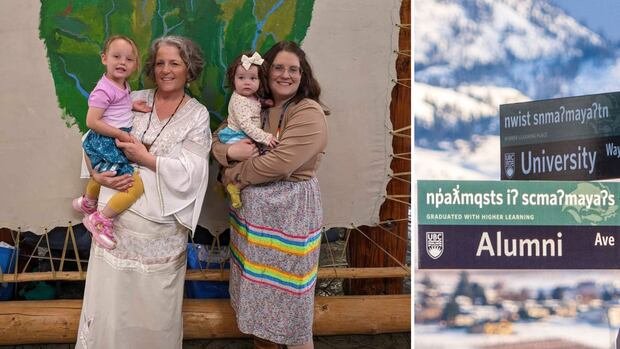

An initiative to incorporate Nsyilxcn names onto street signs at the University of British Columbia’s (UBC) Okanagan campus has empowered two generations of Syilx Okanagan women to reconnect with their heritage and assert their cultural identity.
For the past 15 years, UBCO has been integrating the language of the Syilx Okanagan Nation into its campus street names, offering interpretations of names such as Alumni Avenue and University Way. Nsyilxcn is the language of the Syilx Okanagan Nation, whose traditional lands UBCO’s campus occupies.
Recently, Llana Teichroeb and her daughter Kim Kosick, both Syilx Okanagan women, created an online pronunciation guide featuring recordings of themselves enunciating various street names. The guide is now accessible through new QR codes installed on the signposts.
Teichroeb and Kosick aspire for their project to contribute to reconciliation efforts. Teichroeb shared that aside from honoring her grandmother’s voice, who was a survivor of residential schools, the endeavor has also allowed her to reclaim her own voice and identity.
Learning their ancestral language was a significant journey for both Teichroeb and Kosick, as English was their primary language. Kosick emphasized the importance of taking the language course together, especially amid the COVID-19 pandemic when it transitioned to online learning.
The inclusion of QR codes not only facilitates language learning but also promotes active engagement with the Nsyilxcn language, providing an opportunity for students and visitors to connect with the language’s sounds and meanings.
Furthermore, the project extended beyond the mother-daughter duo, involving Kosick’s daughters who were exposed to Nsyilxcn during their early years on campus. During the graduation ceremony in 2024, Kosick’s children joined their mother and grandmother on stage, marking a special moment for the family.
Christine Schreyer, the professor overseeing the project, expressed her excitement for future developments, including introducing QR codes for more words and expanding language courses to include other Interior Salish languages.
The initiative at UBCO not only promotes Nsyilxcn language fluency but also opens avenues for language revitalization efforts through student-led projects like podcasts. It aims to foster a deeper connection between individuals and the indigenous languages rooted in the land.
As the project progresses, the hope is to further integrate indigenous languages into everyday campus life, providing opportunities for broader engagement and understanding of the region’s diverse cultural heritage.