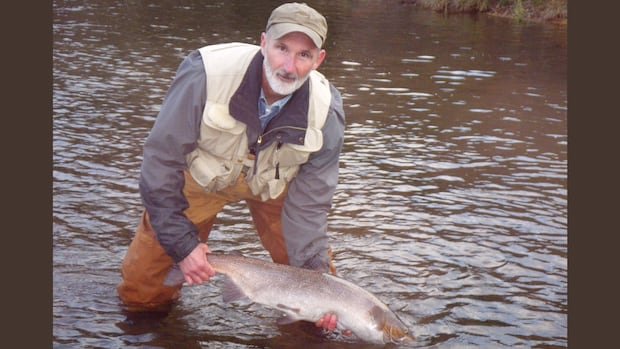

A federal advisory panel has broadened its list of threatened Atlantic salmon populations, causing concern among conservation organizations in Cape Breton. The potential outcome of this change could result in the cessation of recreational fishing for this iconic species in significant portions of New Brunswick, Prince Edward Island, and Nova Scotia. While the Department of Fisheries and Oceans acknowledges this possibility, it emphasizes that it is not a definite conclusion.
This adjustment in assessment status was disclosed during recent federal fisheries meetings with stakeholders following the reevaluation of salmon populations by the Committee on the Status of Endangered Wildlife in Canada (COSEWIC). The reassessment encompassed salmon populations along the entire coast of Nova Scotia and throughout the southern Gulf of St. Lawrence.
Rene Aucoin, president of the Cheticamp River Salmon Association, expressed his dismay at the new designation, particularly in light of the robust salmon population in the western Cape Breton river over the past decade. Similarly, Bill Hailey, vice-president of the Margaree Salmon Association, highlighted the disparities in salmon health across different regions, noting the adverse impact on the Miramichi River in New Brunswick compared to the healthier state of the Margaree River.
Both Aucoin and Hailey are apprehensive that COSEWIC may recommend including the Nova Scotia and southern Gulf salmon populations under the Species at Risk Act, potentially leading to the cessation of recreational angling activities, even catch-and-release practices.
The process of potentially listing the species as endangered under federal legislation is complex and lengthy, involving public consultation with various stakeholders. The conservation strategy for Atlantic salmon implemented by the Department of Fisheries and Oceans aims to rebuild fish stocks but has faced criticism for inadequate funding.
While COSEWIC’s assessment raises conservation concerns, decisions regarding the listing of species under the Species at Risk Act will consider scientific advice alongside socio-economic factors. The potential economic impact, conservation efforts, social implications, and Indigenous perspectives will be taken into account in the listing process.
The stakeholders are prepared to challenge any permanent changes to the salmon status, recognizing the gravity of the situation despite the extended timeline involved in the decision-making process.