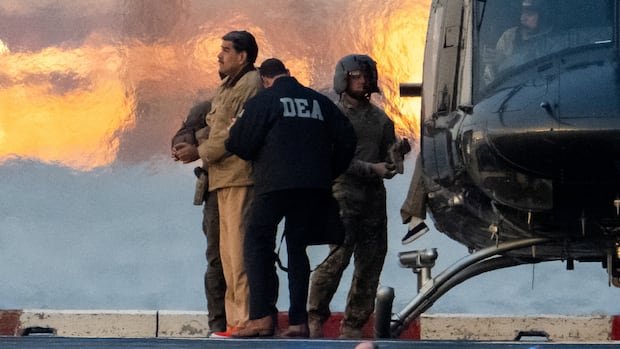

Nicolás Maduro, the former Venezuelan president, is currently detained in a Brooklyn prison alongside his wife, Cilia Flores, following a dramatic arrest in Caracas. Maduro is expected to argue for immunity as a head of state, while the United States disputes his legitimacy since his disputed 2019 re-election. Legal experts suggest that the Department of Justice may challenge Maduro’s status as a legitimate head of state due to concerns over his election process.
Maduro’s defense team is likely to focus on his sovereign immunity, emphasizing his position as a sovereign state leader. The charges against Maduro and his associates, including drug trafficking and conspiracy, carry severe penalties, including potential life imprisonment if convicted. Comparisons have been drawn between Maduro’s case and the arrest of Panama’s Manuel Noriega, highlighting the complexities of prosecuting a sitting head of state.
The U.S. government has framed the charges against Maduro as a form of narco-terrorism, linking drug trafficking to national security concerns. While Maduro’s defense strategy remains unclear, legal experts anticipate challenges to the allegations and the manner of his arrest. The absence of fentanyl-related charges in the indictment is notable, as previous U.S. actions in the region focused on combating fentanyl trafficking.
The ongoing legal proceedings raise questions about the intersection of international law, criminal justice, and state sovereignty. Maduro’s defense is expected to challenge the allegations of drug trafficking and weapons possession, highlighting potential legal hurdles in proving these charges. Despite parallels with past cases, Maduro’s defense team faces unique challenges in navigating the legal complexities of the international criminal justice system.