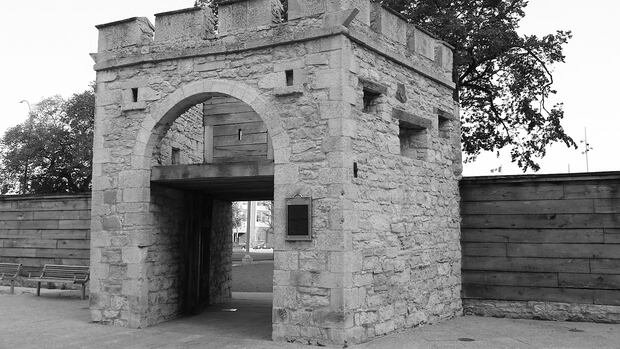

The Hudson’s Bay Company disappeared from the scene back in June as its final stores closed down, but traces of its influence in Winnipeg may never fully fade away.
The 355-year-old retailer played a crucial role in the establishment of Winnipeg, and remnants of its legacy can be found throughout the city in various forms such as street names, revamped buildings, road layouts, and a wealth of historical records.
Gordon Goldsborough, the acting executive director of the Manitoba Historical Society, emphasized that the presence of The Bay will forever endure in Winnipeg due to the numerous reminders scattered across the city.
The iconic former HBC department store, a massive six-storey, 650,000-square-foot structure located at Portage Avenue and Memorial Street, stands as a prominent reminder of the company’s once-dominant empire. However, there are other lesser-known structures that were integral to the HBC’s downtown complex.
The HBC, established in 1670 with a royal charter from the British Crown for fur trading in Rupert’s Land, encompassed a vast territory including parts of present-day northern Quebec, northern Ontario, Nunavut, the Prairies, and regions in the United States.
As the fur trade era waned, the HBC shifted towards retail operations and eventually sold off Rupert’s Land to the Dominion of Canada in 1869, retaining significant land holdings around its trading posts.
The HBC’s imprint on Winnipeg extended to urban planning, with distinct street layouts and land development initiatives. The company’s influence is evident in street names like Fort, Garry, Ellice, and others, honoring HBC posts and individuals associated with the company.
Despite its historical significance, the HBC’s legacy is also marked by its negative impacts on Indigenous communities through exploitative practices and the spread of diseases.
In a notable development in April 2022, the HBC transferred ownership of its iconic Portage Avenue store to the Southern Chiefs’ Organization for redevelopment into a mixed-use project, symbolizing a significant step towards reconciliation and Indigenous empowerment.
The transfer of the colonial-era HBC building to Indigenous hands represents a powerful metaphor for progress and healing, signaling a new chapter in acknowledging and addressing the complexities of Canada’s colonial past.