
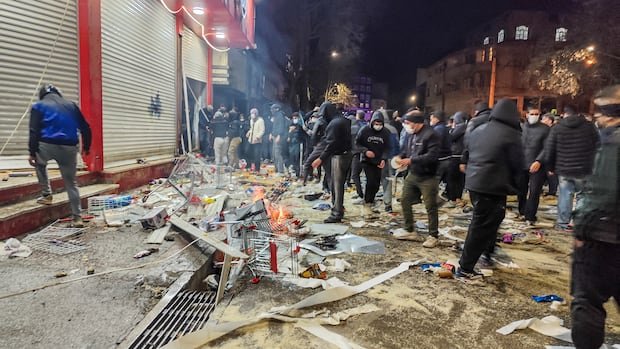

On Thursday night, demonstrators took to the streets of Tehran in response to a call for mass protests by exiled Crown Prince Reza Pahlavi, leading to an escalation of ongoing unrest in Iran. Following the protests’ onset, internet access and telephone communication within Iran were abruptly cut off.
These demonstrations served as a pivotal moment to gauge the populace’s receptiveness to Pahlavi, whose father, the former Shah of Iran, fled the country prior to the 1979 Islamic Revolution. The protests, initially sparked by economic grievances, have evolved to include chants supporting the shah, a sentiment previously punishable by death.
The protests, which expanded across various Iranian cities and towns, gained momentum on Thursday, with more markets and bazaars shutting down in solidarity. The unrest has resulted in 41 fatalities and over 2,270 detentions, as reported by the Human Rights Activists News Agency based in the United States.
The mounting protests are intensifying pressure on both Iran’s civilian government and Supreme Leader Ayatollah Ali Khamenei. Reports from CloudFlare and NetBlocks indicated an internet blackout orchestrated by the Iranian government, often preceding severe crackdowns on dissent.
Notably, the protests lack a defined leadership structure, raising uncertainties about the impact of Pahlavi’s call on future demonstrations. The absence of a prominent figurehead has historically hampered protest movements in Iran, as observed by Nate Swanson from the Atlantic Council.
Pahlavi’s call for demonstrations at a specified time incited widespread participation, with chants denouncing the regime and expressing support for the shah echoing through Tehran’s neighborhoods. The protests, which have remained leaderless, have prompted a cautious response from Iranian officials, with concerns raised about potential violent reprisals.
The unrest in Iran comes amidst a backdrop of economic challenges exacerbated by recent conflicts and international sanctions. The Iranian rial’s devaluation and ongoing protests against the ruling theocracy have further fueled discontent among the populace.
As tensions escalate, global attention has turned to the situation in Iran, with U.S. President Donald Trump issuing warnings to the Iranian government regarding potential repercussions for violent suppression of dissent. The exchange of threats between the U.S. and Iran underscores the volatile geopolitical dynamics at play.
Despite international scrutiny and diplomatic exchanges, the future trajectory of the protests in Iran remains uncertain, with the potential for further crackdowns or escalation of civil unrest looming large.