
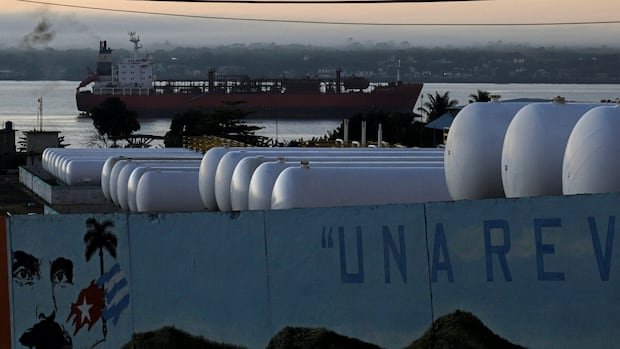

U.S. President Donald Trump declared on Sunday that there will be a halt in the flow of Venezuelan oil and money to Cuba, proposing that Cuba should engage in negotiations with the United States. This move intensifies the pressure on the historical U.S. adversary.
Venezuela, a major oil supplier to Cuba, has not shipped any oil to the Caribbean nation since the capture of Venezuelan President Nicolás Maduro by U.S. forces on January 3. This occurred amidst a strict U.S. oil blockade on Venezuela, as indicated by shipping data.
Concurrently, Caracas and Washington are advancing on a $2 billion deal to provide up to 50 million barrels of Venezuelan oil to the U.S. The proceeds from this deal are set to be stored in U.S. Treasury-monitored accounts. This transaction serves as a significant test of the evolving relationship between Trump and interim President Delcy Rodríguez.
In a post on his Truth Social platform, Trump emphasized, “THERE WILL BE NO MORE OIL OR MONEY GOING TO CUBA — ZERO! I strongly suggest they make a deal, BEFORE IT IS TOO LATE.” He pointed out that Cuba has long relied on substantial amounts of oil and money from Venezuela.
Trump did not offer details on the proposed deal, but U.S. officials have recently toughened their stance against Cuba.
Cuban Foreign Affairs Minister Bruno Rodríguez defended Cuba’s right to import fuel from willing suppliers, denying allegations of receiving financial or other compensations for security services provided to any nation. Following the U.S. raid on Venezuela, where 32 Cuban armed forces and intelligence personnel were killed, Cuba stated that those individuals were responsible for security and defense operations.
Cuba heavily depends on imported crude and fuel, primarily sourced from Venezuela, along with smaller quantities from Mexico. As Venezuela’s supply to Cuba has dwindled due to reduced refining capacity, Mexico has emerged as an alternative oil supplier for the island, albeit on a smaller scale.
Recent U.S. intelligence reports paint a challenging economic and political situation in Cuba, with key sectors like agriculture and tourism facing severe strains. The potential loss of support from Venezuela could further complicate governance for President Miguel Diaz-Canel.
CIA assessments do not conclusively support Trump’s assertion that Cuba is on the brink of collapse. Despite issues such as frequent power outages and trade sanctions, the island’s economy remains afloat, albeit under significant pressure.