
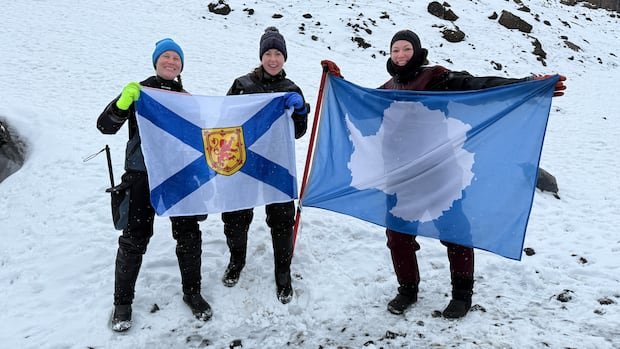

Katie MacIntosh had always dreamed of visiting Antarctica, but her first experience on the continent didn’t go as expected. During her attempt to snorkel from a zodiac to land, she discovered that her wetsuit was leaking. Despite this setback, she reflected on the emotional significance of stepping foot on a continent that few have the chance to explore, especially women in the field of science.
MacIntosh, a marine geomatics engineer based in London, England, was part of a team of three geoscientists from Nova Scotia who embarked on a month-long research expedition to Antarctica. The expedition, led by Sea Women Expeditions, included two dozen women experts from various countries studying the impacts of climate change.
The team, which coincidentally had three out of four leaders in underwater robotics from Nova Scotia, conducted research in the challenging Antarctic environment. MacIntosh emphasized the unique opportunity of working as an all-female team in such a remote location, where deploying scientific equipment was a remarkable achievement.
The scientists spent weeks diving and snorkeling to collect data underwater, studying leopard seals, testing whale bones, and mapping glaciers. While their work was focused on serious scientific research, they also brought a touch of their Maritime heritage, playing local tunes while deploying robotic gear from their zodiac.
Heather Pearce, a geoscientist consultant from Chester, was tasked with scuba diving near glaciers to study benthic marine life. She expressed the profound impact of descending into the Antarctic waters and exploring the marine environment firsthand.
Denise Brushett, a mapping specialist originally from Lake Ainslie but now residing in Halifax, shared her awe at witnessing the vast ice formations in Antarctica. She was struck by the stark contrast between historical maps and the current landscape, showcasing the visible effects of melting ice, including newly formed lagoons and fresh ridges.
Brushett emphasized the importance of sharing their experiences with others and raising awareness about climate change. Over the next year, the team plans to analyze their collected data and engage with schools to educate students about the environmental challenges faced in Antarctica.
Through their Antarctic expedition, these Nova Scotia scientists not only conducted valuable research but also showcased their dedication to ocean science and environmental stewardship.