
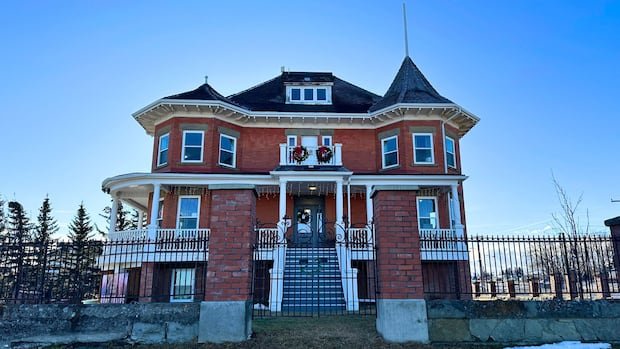

Perched atop a hill, the Lebel Mansion in Pincher Creek stands as a symbol of history and charm overlooking downtown. Celebrating its 115th anniversary last year, this former Catholic hospital underwent a transformation more than four decades ago, thanks to a dedicated group of art and heritage supporters who saved it from potential obscurity.
Today, the mansion bustles with activity, housing a public pottery studio and children’s art programs in the basement, a gift shop featuring the works of over 60 local artists on the main floor, and various businesses, including an art gallery, meeting rooms, and service providers like accountants and massage therapists. Despite its vibrant atmosphere, sustaining the mansion still relies on grants and the backing of the local community.
Kassandra Chancey, the Executive Director of the Allied Arts Council of Pincher Creek, noted a significant increase in community and town support over the past decade, emphasizing the ongoing dedication and effort poured into preserving the historic space. The mansion, originally built in 1910 by the Lebel family, holds a special place in the hearts of many due to its conversion into a Catholic hospital in 1924, a move that resonates with locals’ personal connections and memories.
After a period of vacancy in the 1980s following the hospital’s closure, a group of artisans spearheaded efforts to save the mansion, emphasizing transparency and community engagement to garner support. Their hard work paid off, leading to the building’s restoration and eventual reopening as a thriving arts and community center. Today, the mansion continues to engage visitors of all ages, including children intrigued by the local ghost story of Evangeline, adding a touch of mystery and intrigue to its historical ambiance.
The success of the Lebel Mansion serves as a beacon for community-driven heritage preservation, contrasting with the struggles faced by similar projects like Edmonton’s Ortona Armoury and Calgary’s old YMCA. Dave Chalmers, a heritage conservation expert, highlighted the challenges inherent in financing and maintaining heritage structures, underscoring the lasting benefits of preserving these iconic landmarks for future generations.