
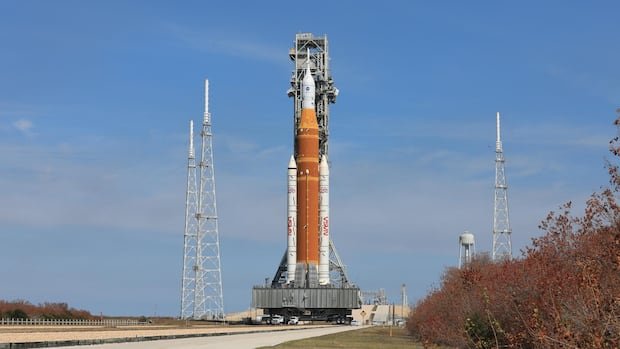

NASA has restructured its Artemis program, shifting the focus from a planned 2028 moon landing to conducting test flights in low-Earth orbit next year. This adjustment follows the recent postponement of the Artemis II rocket launch due to critical technical issues, pushing back the moon flyby by a few months.
NASA Administrator Jared Isaacman announced that Artemis III will now involve a docking test in low-Earth orbit between the Orion astronaut capsule and the new lunar landers from SpaceX and Blue Origin. The agency still aims for a lunar landing with Artemis IV in 2028 and plans to increase mission frequency to potentially launch every year or every 10 months.
Isaacman emphasized the need for a more active launch schedule, highlighting the importance of maintaining skills and muscle memory among NASA personnel. He stressed the significance of testing various mission components, including astronauts’ lunar landing suits and extravehicular activities, to align with the approach taken during the Apollo missions.
The revised strategy reflects NASA’s historical approach to space exploration, with an emphasis on incremental testing and development before embarking on lunar missions. The upcoming Artemis II mission, set to include Canadian Space Agency astronaut Jeremy Hansen and NASA astronauts Reid Wiseman, Christina Koch, and Victor Glover, remains unchanged in its current plans.