
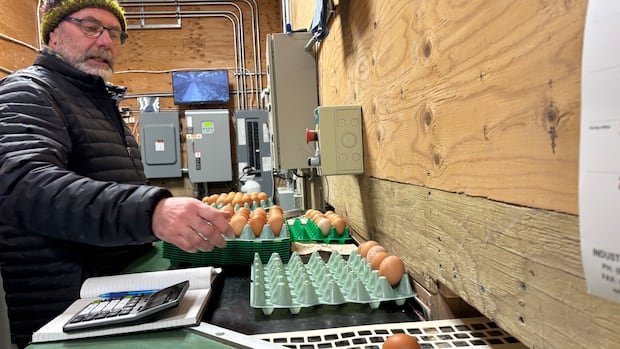

Alan Stannard has been keeping watch over his 4,400 chickens day and night in recent weeks. As the co-owner of Mandalay Farms and Little Red Hen Eggs in Whitehorse, he is vigilant about any potential issues that may arise due to the cold weather. Stannard compares his monitoring to checking for drafts or frozen pipes in a home.
The frigid temperatures in Yukon during December, dropping to as low as -50°C in some areas, can create high humidity levels in the barn. This humidity can lead to health problems like pneumonia in the chickens or impact their egg production. Stannard utilizes a system where his cellphone is linked to the barn’s computer, alerting him to any malfunctions or shutdowns.
Equipped with automatic heaters, ventilators, and other devices, the barn is constantly monitored through Stannard’s cellphone. He receives notifications if issues arise, such as frozen ventilation or malfunctioning equipment. Stannard, an experienced farmer in the region since the early 2000s, explains that sudden extreme cold snaps pose challenges, requiring manual adjustments to the ventilation system to maintain optimal conditions for the chickens.
Stannard emphasizes the importance of backup power, as outages can disrupt essential operations like keeping the chickens warm and refrigerating the eggs. To mitigate this risk, the barn is equipped with two backup generators. Despite the harsh conditions, Stannard believes the chickens are coping well, although occasional disputes among them occur.
The chickens are not allowed outside unless the temperature is above -10°C and there is no strong wind. Stannard humorously describes the potential consequences of chickens venturing out in extreme cold, likening it to a “Fight Club” scenario. Fortunately, no chickens have succumbed to the cold weather thus far.
Amber Elliot, a livestock technician with the Yukon Government, highlights the impact of cold stress on animals, which can exacerbate underlying health issues. She underscores the importance of proper care and attention to livestock during extreme cold weather, mentioning available veterinary services and telehealth options for farmers in remote areas.
In conclusion, maintaining the well-being of livestock during extreme cold weather presents various challenges for farmers like Stannard but requires diligent monitoring and proactive measures to ensure the animals’ health and safety.