
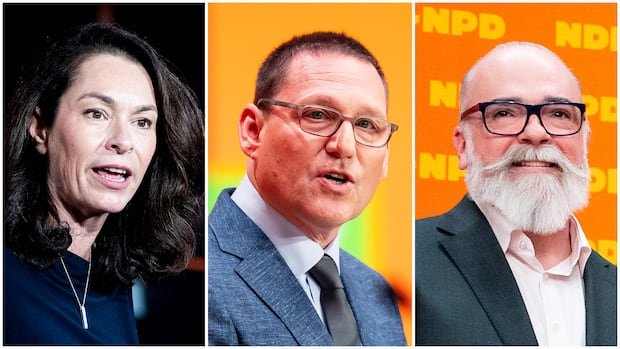

The NDP leadership contest is shaping up to be a close race with no definitive frontrunner identified yet. The current lineup of candidates consists of three contenders who are leading the pack, as per insights from various NDP strategists and analysts.
As the crucial membership registration deadline of Jan. 28 approaches, the outcome remains uncertain, with no candidate holding a clear advantage and all displaying signs of gaining momentum. Ji Won Jung, an NDP organizer associated with the grassroots movement Reclaim Canada’s NDP, emphasized the high level of unpredictability in the race, stating that there is ample room for fluctuations.
The upcoming selection of the NDP leader is set to take place at a national convention in Winnipeg in March, where five candidates are anticipated to be on the ballot. However, party insiders suggest that the competition is mainly among three prominent contenders: Heather McPherson, Avi Lewis, and Rob Ashton.
In the initial stages of the race last September, the scenario appeared different. Erin Morrison, a seasoned NDP strategist, noted that many expected McPherson to have a smooth path to victory due to her status as the sole incumbent MP in the running. McPherson’s campaign has focused on positioning her as a reliable leader with a successful electoral history and a track record of challenging the Conservatives in Alberta. She is often viewed as the establishment candidate, backed by former staffers of prominent leaders like Jack Layton and Jagmeet Singh.
Each candidate, including McPherson, is currently engaged in a final push to recruit as many members as possible, considering the significance of enrolling new members and reactivating lapsed ones under the NDP’s one-member, one-vote system.
McPherson’s strategic emphasis on Alberta, particularly evident in her event schedules, underscores the significance of the Prairie provinces in the race. Alberta, with its substantial NDP membership base, could wield significant influence in the outcome, given that provincial New Democrats can easily transition to federal party membership. McPherson’s ties to Alberta, where she received an endorsement from former NDP Premier Rachel Notley, could provide her with a competitive edge.
On the financial front, Lewis has garnered notable support, having raised over $780,000 from donors nationwide by December, surpassing the required entrance fee and approaching the campaign spending limit. Fundraising prowess often serves as a key indicator of a leadership candidate’s viability, although specific fundraising details from other frontrunner campaigns have not been disclosed. In contrast, underdog candidates Tanille Johnston and Tony McQuail have faced challenges in fundraising, with Johnston highlighting the difficulty of soliciting financial support from working-class NDP backers during economic hardships.
Endorsements and organizational backing are poised to play a crucial role in shaping the race’s dynamics. The United Steelworkers, the largest private sector union in North America, announced its support for Ashton, a relatively lesser-known labor leader. The union’s backing, coupled with its substantial membership base, could significantly bolster Ashton’s campaign.
Despite the potential for a riveting political narrative, the NDP leadership race has struggled to capture widespread attention amid competing news cycles. The contest has been overshadowed by global events, and the candidates’ preference for a civil discourse over confrontation has led to perceptions of a lackluster campaign. However, recent indications suggest a possible escalation in tensions within the race, particularly between Ashton and Lewis, hinting at a more dynamic phase ahead.