
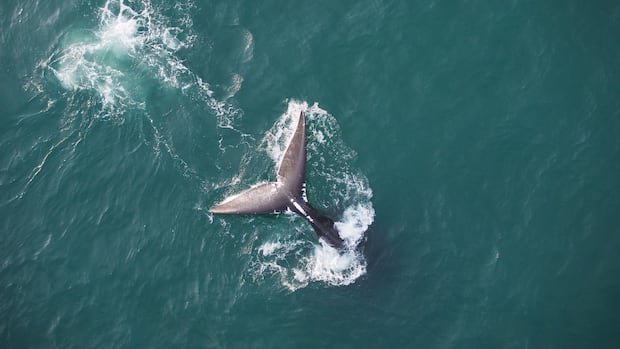

The United States is considering revisions to regulations aimed at safeguarding the critically endangered North Atlantic right whale from ship strikes along the East Coast. The National Oceanic and Atmospheric Administration (NOAA) of the U.S. is exploring updates to leverage modern technology to prevent collisions between ocean vessels and whales while meeting industry demands. The proposed changes are part of an initiative aligned with the President’s vision to integrate advanced technologies, bolster American industry, and streamline regulations, as mentioned by Neil Jacobs, the NOAA administrator, in a recent press release.
To gather insights on minimizing unnecessary regulatory and economic constraints associated with the speed restrictions imposed on larger ships since 2008, the agency is soliciting external feedback. Despite the potential of technology, experts caution that current advancements are insufficient to effectively avert whale collisions. Sean Brillant, the marine program coordinator at the Canadian Wildlife Federation, emphasized the need for continued vigilance, stating that while technologies like satellites, thermal imaging, and surveys can aid in whale detection, they do not offer predictive capabilities to prevent collisions.
Moira Brown, the director of science at the Canadian Whale Institute, highlighted the experimental nature of infrared cameras mounted on ships for whale detection, underscoring their limitations in preventing collisions due to restricted field of vision. While acknowledging the potential of new technologies in enhancing protection, Brown emphasized the importance of maintaining existing speed regulations, describing any proposal for change as detrimental to conservation efforts.
A 2020 report by NOAA assessed the effectiveness of existing speed limit regulations, which mandate vessels over 20 meters to reduce speed in specific areas. While the regulations have led to a reduction in whale mortalities, the report recommended strengthening enforcement, extending regulations to smaller vessels, and adjusting the timing and locations of speed limits for enhanced efficacy.
Captain Bob Peacock, a seasoned ship pilot in Maine, stressed the significance of adhering to speed limits and effective communication to prevent whale collisions. Despite advancements in drone technology for whale spotting, Peacock emphasized the irreplaceable role of human observation and experience in navigating whale-inhabited areas safely. The North Atlantic right whale population, facing threats from fishing gear entanglement and ship strikes, has been dwindling, with fewer than 400 individuals estimated to remain, underscoring the urgency of conservation measures.