
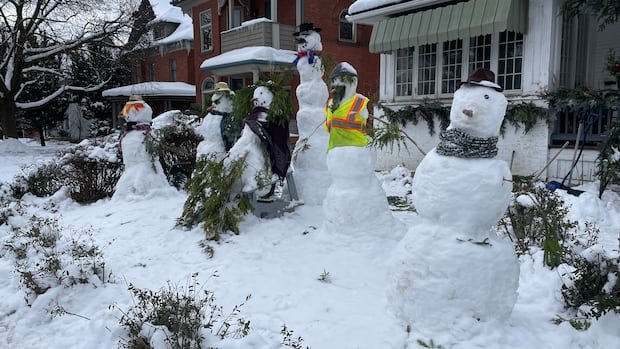

December in the region was notably colder and snowier than usual, as per a recent report from the E.D. Soulis Memorial Weather Station at the University of Waterloo. The report reveals that December experienced temperatures approximately three degrees below the average, marking it as the second coldest December in the past two decades, with the chilliest recorded in 2017. An interesting temperature spike occurred on the early morning of December 29, with a rapid increase from 0.8°C to 8.9°C within an hour, followed by a drop to 4.8°C an hour later and a plunge well below zero a few hours after.
Precipitation levels were also notably high, with a total of 113.2 millimeters throughout the month, surpassing the average of 72.1 millimeters. Snowfall measured 54.5 centimeters, significantly exceeding the average of 30.7 centimeters, making it the snowiest December since 2008. Additionally, a mix of rain, ice pellets, and snow further contributed another 50 millimeters on December 28.
The report highlights that the total snowfall for the season so far, standing at 113.5 centimeters, is more than double the average of 41.8 centimeters. Snowfall has extended into the new year, with forecasts from Environment and Climate Change Canada predicting continued snowfall until Tuesday, followed by a temporary rise in temperatures above zero.
Amid fluctuating temperatures, the Grand River Conservation Authority (GRCA) issued a warning advising people to avoid walking on ponds, rivers, or streams due to potentially unsafe conditions. While colder temperatures have enabled ice formation, various factors like temperature changes, wind, precipitation, and underwater currents can significantly impact ice stability. The GRCA emphasized that the ice may easily break due to these factors and should not be used for any winter activities. The authority also cautioned that snow covering the ice can conceal weak areas and impede proper freezing.
Ice fishing remains prohibited in all GRCA parks, with the authority attributing increased water levels and flows in the Grand River watershed to recent warm and wet weather. Major reservoirs in the region were utilized to mitigate downstream flood risks, resulting in elevated water levels expected to persist into the following week as stored runoff is gradually released.