
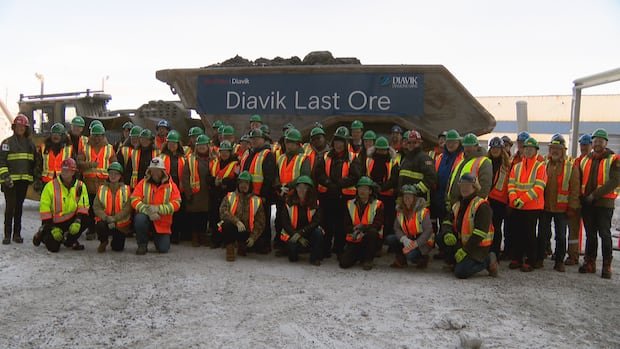

A longstanding mine in the Northwest Territories is ceasing its operations to shift focus towards remediation efforts. The Diavik diamond mine, situated approximately 300 kilometers northeast of Yellowknife, has been in operation for many years, yielding over 150 million carats of diamonds under the ownership of Rio Tinto. The mine officially closed on Tuesday, marking the end of an era.
Throughout its existence, the Diavik mine has employed hundreds of individuals, with over 1,000 workers at its peak. While not all employees were local to the North, some have expressed their desire to remain in the region. Sean Sinclair, hailing from Ontario, has made the Northwest Territories his home for over ten years, starting his journey with Diavik during his master’s degree and progressing to the role of closure manager at the mine.
Sinclair’s personal life has also intertwined with his professional one, as he met his wife in Yellowknife, who coincidentally also works at Diavik. Both share a deep affection for the city and have no plans to depart anytime soon. Similarly, Mike Lowing, the principal adviser for health, safety, and environment at the mine, has been a resident of Yellowknife since 1974. He remains optimistic about the city’s future despite the closure of diamond mines, highlighting the upcoming opportunities in major projects.
The closure of Diavik will impact several communities in the territory; however, individuals like Lowing are open to new ventures, such as those presented by Prime Minister Mark Carney’s recent announcement of a $35 billion investment plan for the North. Projects like the Mackenzie Valley Highway and Taltson hydro expansion, along with the Arctic economic and security corridor, offer promising prospects for the local workforce.
Although the Diavik mine is coming to a close, industry experts like Alex Clinton emphasize the continued importance of mining activities in the territories. Clinton, a senior adviser at Diavik with a long tenure in Yellowknife, anticipates a resurgence in gold mining, citing the growing demand for the precious metal. Recent developments, such as the reopening of Mon Mine by Sixty North Gold after nearly three decades of dormancy, indicate a positive trend in the gold mining sector.
As gold prices soar to record highs, surpassing $5,000 US per ounce, Clinton sees a bright future for the industry in the Northwest Territories. His commitment to the region is unwavering, fueled by the hope that his children will have opportunities in the same field that has shaped his life.