
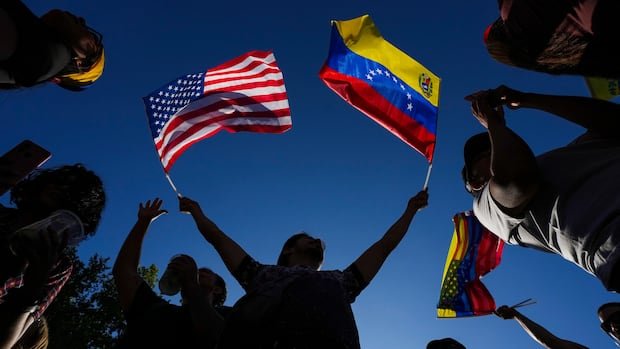

Hours after the U.S. military operation in Venezuela capturing President Nicolás Maduro, Katie Miller, wife of top Trump adviser Stephen Miller, warned Canada on social media that the U.S. no longer depends on Canada and that free trade is a thing of the past. This assertion, echoing sentiments from Trump’s circle, gains significance with the potential access to Venezuela’s vast heavy crude oil reserves similar to those in Western Canada.
As Ottawa prepares for the Canada-U.S.-Mexico Agreement (CUSMA) review, the question arises whether developments in Venezuela weaken Canada’s negotiation position. Experts and former officials, interviewed by CBC’s “The House,” discuss the feasibility of escalating Venezuelan oil production and its implications.
According to RJ Johnston, director of energy and natural resources policy at the University of Calgary, Venezuela’s oil sector has deteriorated, posing risks for U.S. oil companies contemplating re-entry. The U.S. government is urging oil executives to invest in Venezuela to revive the oil industry.
Despite concerns, Prime Minister Mark Carney remains unfazed by increased Venezuelan oil production, citing Canada’s competitive, cleaner, and lower-risk oil. However, Canadian energy stocks suffered post-U.S. intervention, impacting the economy, particularly in Alberta.
Former official Kate Kalutkiewicz believes the events in Venezuela signal Trump’s intent to reduce reliance on single trading partners, emphasizing his negotiation tactics. While the situation in Venezuela may not directly influence trade talks, it underscores the U.S.’s interest in the Western Hemisphere.
Experts suggest Canada should diversify economic relationships to strengthen its negotiating position with the U.S. Despite challenges, the future of CUSMA remains uncertain amid demands for market access and regulatory changes. Laura Dawson emphasizes the need for cautious concessions to protect economic interests during negotiations.