
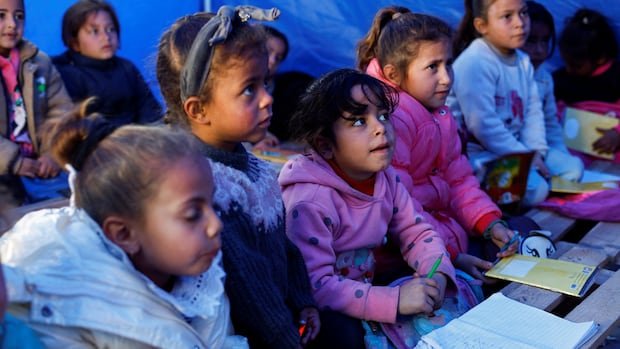

Mona Al-Zanati expresses relief as her son returns to school, despite her constant anxiety when he is not by her side. Every moment away from her triggers fear, making her want to ensure his safety, even sending his father to check on him if he is late. Her son, Yamen, aged 10, is part of the many children in Gaza resuming studies after enduring Israeli attacks for two years.
Yamen attends a temporary school in Beit Lahiya, set up in blue tents within sight of the “yellow line” dividing Gaza under a fragile ceasefire since October. Despite the ceasefire, parents and teachers highlight ongoing safety concerns, compounded by Israel’s blockade limiting access to basic school supplies.
UNICEF, managing several makeshift schools, faces challenges in providing essential tools due to Israel’s restrictions on supplies like pens and notebooks. Despite these difficulties, there is a sense of joy in the classrooms, as students eagerly embrace the opportunity to learn and interact with their peers.
In Beit Lahiya, children like Toulin Al-Hindi, aged seven, express gratitude for being back in school, emphasizing the importance of education despite the lack of basic amenities. The region’s tumultuous past, marked by conflict and displacement, has significantly disrupted the educational journey of Gaza’s children.
Although the ceasefire has halted major hostilities, daily gunshots remind students and staff of the persistent risks. Safety remains a concern as Yara Abu Ghalweh, a school supervisor, acknowledges the limitations in ensuring a secure learning environment.
Despite the challenges, determined parents prioritize education, recognizing its long-term value. The educational landscape in Gaza has been marred by closures and disruptions, with children facing significant learning gaps due to the combined impact of the COVID-19 pandemic and conflicts. Al-Zanati, like many parents, navigates fear and uncertainty but remains steadfast in her commitment to her son’s education.