
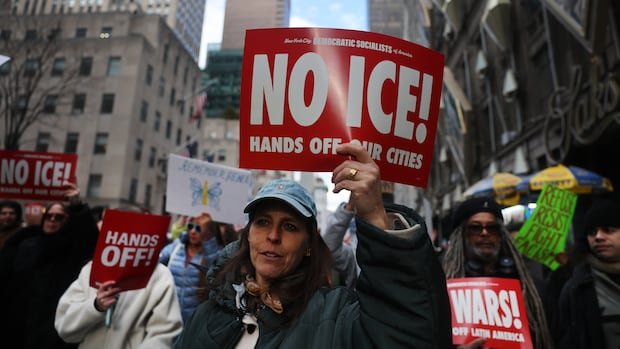

A new menace is traversing American streets, posing a threat to law enforcement. Described as furious, organized, and allegedly equipped with wine, a conservative commentator highlighted the involvement of “organized gangs of wine moms” in the tragic death of Renee Nicole Good in Minneapolis. The columnist criticized these “self-important White women” for interfering with law enforcement and confusing civil disobedience with criminal acts, attributing Good’s demise to this confusion.
The column sparked immediate online reactions and raised concerns among experts regarding a troubling narrative unfolding in U.S. politics. This narrative goes beyond a single opinion piece, revealing broader implications about the response to Good’s death and dissent against the administration’s strategies, according to Shana MacDonald, a communication expert at the University of Waterloo.
The discourse surrounding Good’s shooting, where conflicting narratives emerged, saw Trump and DHS Secretary Kristi Noem defending the ICE officer’s actions as self-defense, while Democratic officials challenged the administration’s version of events. Noem labeled Good’s actions as “domestic terrorism,” with Trump and Vice-President JD Vance making derogatory remarks about the victim.
Despite being an opinion piece, the Fox News article is seen as part of a pattern that blames protesters to legitimize aggressive tactics against U.S. citizens, as noted by Michelle Chen, a communications professor at Brock University. This tactic is viewed as a diversion from focusing on the real issues at hand.
Amid these controversies, mothers in Minneapolis have taken to social media to share their experiences with the ICE crackdown. They express concerns about the impact on their daily lives and emphasize the need for attention to the community’s plight. The vilification of these women, labeled as “wine moms,” is seen as a tactic to discredit their activism, redirecting public opinion and undermining their cause.
The criticism directed at these mothers signifies a broader trend of targeting women who enter the public sphere, as pointed out by activist Reshma Saujani. The historical significance of mothers engaging in political movements is highlighted, emphasizing the importance of recognizing and respecting their voices in society.
The media’s portrayal of protests and protesters has been a recurring theme, often framing demonstrations in a negative light. This negative framing is now extending to groups like the “wine moms,” typically seen as a valued demographic in politics. The transformation of this demographic into perceived adversaries reflects a significant shift in public discourse and political messaging.